Dark charcoal, deep blue, warm brown, soft white, beige, and natural gray are shaping siding choices across the United States. Learn how dark and light vinyl colors compare—and how proper records can help preserve transferable warranty coverage for a future homeowner.
Vinyl Siding Color and Warranty Guide
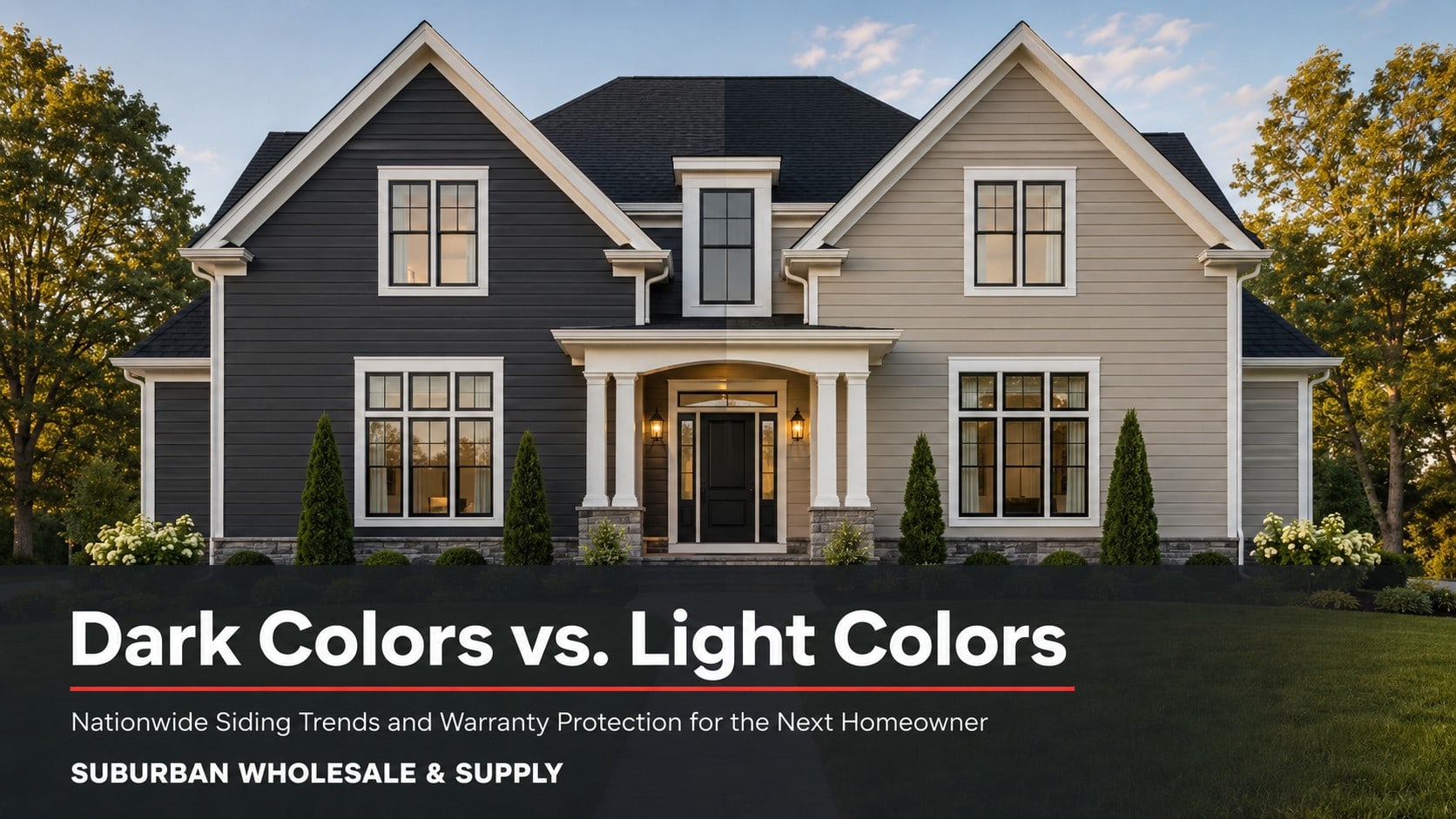
Dark Colors vs Light Colors: Nationwide Siding Trends and Warranty Protection for the Next Homeowner
Dark siding continues to make a strong architectural statement, while light colors remain popular for their timeless appearance and broad resale appeal. The best choice depends on the house, surrounding materials, exposure, product line, and how carefully the warranty records are preserved.
Homeowners across the United States are becoming more comfortable with deeper exterior colors. Charcoal, deep blue, forest-inspired green, rich brown, and near-black accents appear frequently on modern, farmhouse, Craftsman, and contemporary homes.
Light siding has not disappeared. Soft white, cream, beige, greige, lighter gray, and muted natural colors remain dependable choices for traditional homes and owners who want an exterior with broad, lasting appeal.
Recent national design reporting also points toward warmer, richer materials and less dependence on cold, harsh exterior palettes. Rather than one color family replacing another, the broader trend is toward more intentional color combinations.
Homeowners and contractors can explore vinyl siding options from Suburban Wholesale & Supply and compare approved colors, profiles, accessories, and written warranties before making the final selection.
There Is No Single Nationwide Winning Color
National exterior trends do not move in one direction. Dark colors are popular because they create drama and definition. Light colors remain popular because they feel familiar, adaptable, and easy to coordinate.
The strongest color is not necessarily the newest trend. It is the color that fits the home’s architecture, fixed materials, neighborhood, light exposure, and likely future buyers.
Nationwide Exterior Color Trends
Current design direction across the United States favors natural, grounded, and more complex colors. Cool gray remains present, but many homeowners are moving toward warmer neutrals, deeper earth tones, muted greens, rich blues, and softer whites.
Color directions with national appeal include:
- Charcoal and near-black: Often used for full elevations, gables, board-and-batten accents, windows, or trim.
- Deep blue: A strong alternative to gray that works with white, cream, stone, and wood-toned accents.
- Muted green: Popular for homes seeking a natural, landscape-connected appearance.
- Warm brown and taupe: Returning as homeowners move toward warmer, richer exterior materials.
- Soft white and cream: Timeless choices that work across traditional, coastal, farmhouse, and transitional designs.
- Greige and warm gray: Neutral options that coordinate easily without feeling as cold as blue-based gray.
- Two-tone exteriors: Light main siding paired with dark gables, vertical accents, trim, shutters, or entry features.
- Natural mixed materials: Vinyl siding coordinated with brick, stone, wood-toned details, composite accents, and metal.
Why Dark Vinyl Siding Is Popular
Dark siding can make a home feel more substantial and architecturally defined. Deep colors emphasize rooflines, gables, windows, entryways, and changes in siding direction.
Potential design advantages include:
- Stronger visual impact from the street
- Greater contrast with light trim and masonry
- A modern or updated appearance
- More definition around architectural features
- Compatibility with black windows and metal accents
- Rich coordination with wood tones and natural stone
Dark siding works particularly well when the home has enough architectural variation to prevent the exterior from becoming visually heavy.
What Homeowners Should Consider Before Choosing Dark Siding
Dark surfaces generally absorb more solar energy than light surfaces. Modern dark-color vinyl siding products are engineered for their approved color ranges, but they still require correct storage, installation, clearances, and accessories.
Dark colors may:
- Reach higher surface temperatures in direct sun
- Show dust, pollen, salt, or water spotting more clearly
- Make wall waves or poor installation more noticeable
- Create a heavy appearance on a small or shaded home
- Provide less flexibility if the color becomes highly trend-specific
- Require careful coordination with roofing and masonry undertones
Contractors should use only colors approved for the exact vinyl siding product. Never field-paint vinyl siding a darker color unless the siding and coating manufacturers specifically approve the complete application.
Why Light Vinyl Siding Remains Popular
Light siding has lasting appeal because it works with many home styles, roof colors, masonry materials, and neighborhood settings. It can make a home appear open, clean, and visually larger.
Potential advantages include:
- Broad compatibility with exterior materials
- A timeless rather than highly trend-driven appearance
- Lower solar heat absorption than very dark colors
- Greater flexibility for changing accent colors
- Strong contrast with dark windows, roofing, and doors
- Potentially broader appeal to future buyers
What Homeowners Should Consider Before Choosing Light Siding
Light siding is not maintenance-free or automatically better at hiding every condition. Certain colors may show algae, mud splash, exhaust residue, rust staining, or organic buildup more readily.
A light exterior can also appear flat if the trim, corners, soffit, fascia, shutters, and entry door provide no contrast. Thoughtful accent choices help create dimension.
Soft white, cream, and warm neutral siding should be compared carefully with existing white windows. Two slightly different whites can clash more noticeably than intentionally contrasting colors.
Dark vs Light Vinyl Siding
| Comparison | Dark Colors | Light Colors |
|---|---|---|
| Visual effect | Dramatic, grounded, and architecturally defined | Bright, open, familiar, and adaptable |
| Trend position | Strong in modern and high-contrast exteriors | Continues as a timeless mainstream choice |
| Surface temperature | Generally absorbs more solar energy | Generally reflects more solar energy |
| Exterior size | Can make a home feel more compact or substantial | Can make a home feel larger and more open |
| Installation visibility | May emphasize waves, distortion, or inconsistent courses | May be more forgiving of minor visual irregularities |
| Cleaning appearance | May show light dust, pollen, and water spots | May show algae, mud, rust, and darker residue |
| Resale flexibility | Strong when appropriate to the architecture and market | Often offers broader, less trend-dependent appeal |
These are general design considerations. Actual performance depends on the exact product, color formulation, exposure, wall assembly, installation, and surrounding environment.
The Strongest Nationwide Trend May Be Contrast
Homeowners do not necessarily need to choose an entirely dark or entirely light exterior. Many current designs combine both.
Popular combinations include:
- Light horizontal siding with dark vertical gables
- Dark siding with warm white trim
- Soft white siding with black windows and gutters
- Deep blue siding with cream trim and stone
- Muted green siding with wood-toned entry accents
- Warm greige siding with charcoal roofing
- Medium neutral siding with a bold dark entry door
Contrast can introduce a trend-driven color without placing it across every elevation. It also allows the home’s strongest architectural features to receive more attention.
National Trends Still Need Regional Judgment
A nationwide trend does not guarantee that the same color will fit every local market. Climate, vegetation, architectural traditions, HOA rules, available products, and neighborhood character influence exterior choices.
In the Midwest, both dark and light colors can work well. The safest approach is to coordinate siding with the home’s roof, brick, stone, windows, soffit, fascia, gutters, and entry system.
Contractors should show large physical samples outdoors and, when possible, direct homeowners to completed homes using the same product, profile, and color.
How Siding Color Relates to Warranty Coverage
A darker siding color is not automatically covered differently from a light color. Coverage depends on the exact manufacturer, product line, warranty version, installation date, cause of the condition, and written definitions.
Gentek identifies fade protection on several vinyl siding lines and states that darker colors are fortified with ChromaTrue® fade-defying technology. The actual warranty still contains conditions, exclusions, measurement standards, remedies, and ownership provisions that must be reviewed.
“Lifetime fade coverage” should never be interpreted as a promise that no visible color change can occur. Warranties typically distinguish covered excessive fading from normal weathering, dirt, staining, mildew, pollution, chemicals, unequal sun exposure, and external heat damage.
Fade Coverage Is Usually Based on a Written Definition
Manufacturer fade coverage may rely on an objective color-measurement threshold rather than the homeowner’s visual opinion alone. For example, a warranty may define covered fading using a specified change measured according to an ASTM color-evaluation method.
That means a homeowner should retain the product information and allow the manufacturer to inspect and validate a claim. A contractor should not promise coverage before the manufacturer completes its review.
Warranty coverage is determined by the written warranty—not the sales brochure, contractor’s summary, or phrase “lifetime color.”
Conditions That May Not Be Considered Covered Fading
Warranty exclusions vary, but homeowners should understand that every form of discoloration is not necessarily a manufacturing defect.
Potential exclusions or limitations may involve:
- Normal weathering
- Mildew, algae, dirt, or environmental staining
- Air pollution or chemical exposure
- Unequal exposure to sunlight
- Heat from grills, fire, or nearby equipment
- Concentrated reflected sunlight
- Improper cleaning methods
- Unapproved paint or coating
- Improper installation
- Building movement or substrate failure
What Helps Preserve the Warranty for the Next Homeowner?
A transferable warranty can support buyer confidence, but transfer rights do not necessarily mean the next homeowner receives identical lifetime, non-prorated coverage.
Depending on the warranty, coverage for a subsequent owner may be limited to a defined number of years, calculated from the original installation date, and subject to a proration schedule. The warranty version in effect when the siding was installed may control.
Never promise the next owner “the same lifetime warranty.” Provide the actual document and let the written transfer provisions control.
Create a Siding Warranty File for the Property
The best warranty-transfer tool is a complete and organized record. The original homeowner should keep digital and paper copies and leave them with the property at resale.
The file should include:
- Original signed contract
- Final paid invoice
- Installation completion date
- Manufacturer and exact product line
- Profile, color name, and product identification
- Manufacturer warranty certificate
- Warranty-registration confirmation
- Contractor’s written workmanship warranty
- Photographs of product labels and cartons
- Photographs of the completed elevations
- Care and cleaning instructions
- Receipts and records for approved repairs
- Contractor and manufacturer contact information
- Any warranty-transfer form or written instructions
Subsequent owners may need the original invoice or contract to establish the installation date, product identity, and eligibility for a claim.
Warranty Steps Before Selling the Home
- Locate the warranty that applies to the installed product. Do not substitute a current warranty for an older installation without manufacturer confirmation.
- Read the transfer section carefully. Confirm whether the warranty transfers automatically or requires a form, notice, fee, signature, or deadline.
- Contact the manufacturer. Ask for the current transfer procedure applicable to the installation date and product.
- Confirm that registration records are accurate. Check the owner’s name, property address, product, and installation date.
- Preserve the original invoice. The next owner may need it to process a future claim.
- Provide documents during the sale. Include the warranty file with property disclosures or closing materials as appropriate.
- Keep proof of transfer. Retain confirmation from the manufacturer when a form or notice is submitted.
- Explain that coverage may change. The subsequent owner’s term and proration may differ from the original owner’s coverage.
How Contractors Can Make Future Warranty Claims Easier
Contractors can add long-term value by giving every homeowner a complete closeout package rather than leaving warranty paperwork scattered across emails, brochures, and invoices.
At project completion, provide:
- Exact manufacturer and product information
- Color and profile confirmation
- Final invoice showing the installation date
- Applicable manufacturer warranty
- Warranty registration instructions
- Written workmanship coverage
- Cleaning and maintenance guidance
- Service and claim contact information
A warranty is harder to use when no one can identify the product, date, contractor, or applicable document.
Choosing a Color With the Next Homeowner in Mind
Homeowners who expect to sell soon may want a color with broad local appeal. That does not always mean white or beige. Deep blue, charcoal, muted green, and warm gray can be highly marketable when they complement the home.
The greater resale risk usually comes from a poorly coordinated or highly personalized combination—not simply from choosing a dark color.
For broader appeal:
- Coordinate with permanent brick and stone.
- Avoid fighting the roof’s undertones.
- Use large samples outdoors.
- Limit the palette to a disciplined number of colors.
- Use bold colors strategically on accents.
- Make sure trim proportions support the contrast.
- Select manufacturer-approved products and accessories.
Color and Warranty Selection Checklist
- View a large siding sample outdoors.
- Compare the color in sun, shade, and overcast light.
- Coordinate it with roofing, brick, stone, and windows.
- Confirm the color is approved for the exact siding line.
- Review matching soffit, fascia, trim, and rainware.
- Consider the home’s size, architecture, and orientation.
- Evaluate dust, algae, and local environmental exposure.
- Review the manufacturer’s fade definition.
- Read exclusions involving heat and unequal sunlight.
- Confirm whether the warranty is transferable.
- Identify how coverage changes after transfer.
- Complete required registration after installation.
- Retain the contract, invoice, product name, and color.
- Verify the transfer process before selling the property.
- Give the complete warranty file to the next homeowner.
Choose for the Home—Document for the Future
Dark siding is no longer a niche choice. Deep neutrals, blues, greens, and browns are part of the national exterior palette. At the same time, whites, creams, beiges, and warm grays remain strong because they offer flexibility and lasting familiarity.
Neither dark nor light siding is automatically better. The right choice fits the architecture, fixed materials, sun exposure, maintenance expectations, and homeowner’s design goals.
For the next homeowner, color selection matters less to warranty protection than documentation. Preserve the exact product information, applicable warranty, original invoice, completion date, registration, maintenance records, and transfer instructions.
Compare Dark and Light Vinyl Siding Colors
Suburban Wholesale & Supply helps contractors and homeowners compare vinyl siding colors, profiles, panel construction, accessories, warranties, and availability. We serve Davenport, Bettendorf, Moline, Rock Island, East Moline, and surrounding Quad Cities communities.
Explore our vinyl siding product options and ask our team to help you compare colors in natural light and review the current warranty for the exact product under consideration.
Choose the color carefully, install the complete system correctly, and preserve the paperwork for the next owner.
Part of: Warranties
More in Warranties
- Why Vinyl Siding Thickness Matters More Than Warranty | Suburban Wholesale & Supply
- Gentek Steel Siding Warranty Guide
- Fairhaven Sound Warranty Transfer When Selling a Home
Most warranty claims are filed online with the manufacturer, and our team can help where needed.
Share This Post
Share it on Facebook or X, or send it through your device share sheet for Instagram.