Explore Gentek’s exterior color collections and learn how colors coordinate across vinyl siding, aluminum, steel, soffit, trim, rainware, and composite cladding. See how siding colors have evolved from the 1980s through today and why actual product samples should be compared at Suburban Wholesale & Supply’s Davenport showroom.
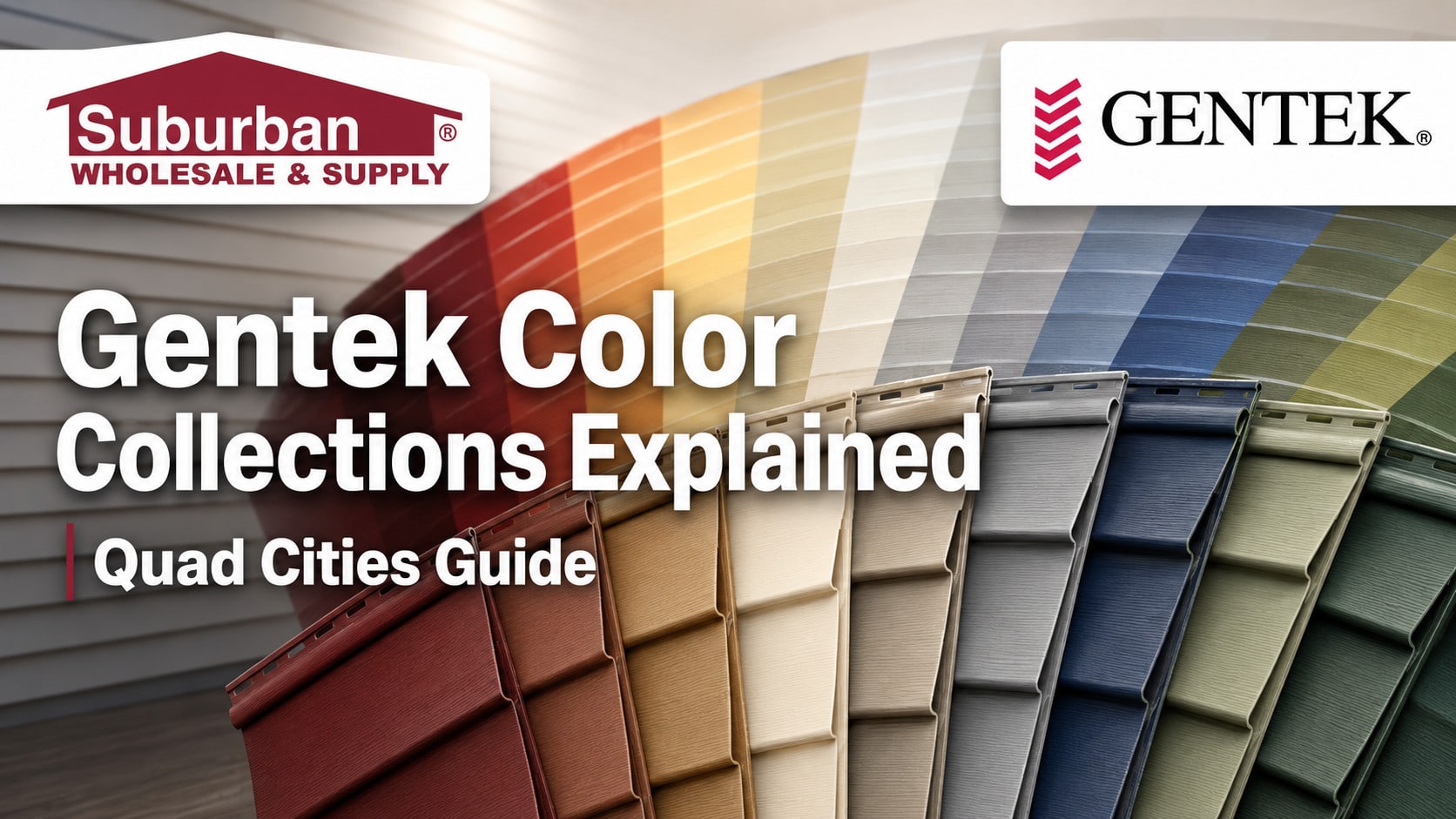
Gentek Exterior Color and Design Guide
Gentek Color Collections Explained
Gentek offers coordinated exterior colors across vinyl siding, aluminum siding, steel siding, soffit, fascia, trim, and rainware. However, good exterior design requires more than finding products with the same color name. Material, texture, gloss, lighting, and surrounding surfaces all influence how a color appears on the finished home.
Color is often the first thing a homeowner notices and one of the last decisions made before material is ordered. It is also one of the hardest decisions to reverse. A homeowner can replace a light fixture or repaint an entry door, but changing an entire siding color is a much larger undertaking.
Gentek’s color collections make it easier to build a coordinated exterior, particularly when a project combines vinyl siding with aluminum soffit, fascia, trim coil, steel siding, or rainware. Gentek describes this coordinated approach as its Color Clear Through® system.
The system is designed to help Gentek siding, soffit, fascia, trim, and rainware coordinate across its vinyl, aluminum, and steel product lines. That is valuable, but contractors should still compare current physical samples before ordering. A coordinated color is not necessarily an optically identical color under every lighting condition.
What Does “Color Coordinated” Really Mean?
Color coordination means that products have been developed to work attractively together as part of a complete exterior system. It does not mean every product will look exactly the same from every angle.
A color applied to aluminum can appear slightly different from a similar color manufactured into vinyl. Steel, composite cladding, trim coil, and rainware can introduce additional differences because each material has its own surface, coating, texture, and reflectivity.
| Factor | How It Affects Color |
|---|---|
| Material | Vinyl, aluminum, steel, and composite cladding use different manufacturing processes and color technologies. |
| Texture | Roughsawn, cedargrain, brushed, smooth, and freshly painted wood textures scatter light differently. |
| Gloss Level | A smoother or more reflective surface may look lighter or more saturated than a matte surface in the same color family. |
| Direction | Horizontal siding, vertical board and batten, soffit, and fascia face the sun from different angles. |
| Lighting | Morning sun, afternoon sun, shade, clouds, snow, and artificial lighting can all shift the apparent color. |
| Surrounding Materials | Roofing, brick, stone, windows, doors, landscaping, and neighboring colors can make siding appear warmer, cooler, lighter, or darker. |
How Color Behaves Across Different Exterior Materials
The material beneath the color matters. Homeowners should compare products as complete exterior components rather than relying only on a printed chart or computer screen.
Gentek Vinyl Siding
Vinyl siding is manufactured with color extending through the material rather than depending on a traditional field-applied paint film. The emboss and low-gloss surface influence how each shade appears across the wall.
Gentek vinyl siding collections include classic colors and, on selected premium product lines, deeper designer colors. Current Sequoia Select choices include traditional neutrals as well as stronger colors such as:
- Coastal Blue
- Midnight Surf
- Marine Dusk
- Hudson Slate
- Iron Ore
- Moonlit Moss
- Meadow Fern
- Smoked Timber
Not every profile, product line, color, or accessory is available in every market. Contractors should confirm availability before making a final presentation to the homeowner.
Gentek Aluminum Siding, Soffit, Fascia, and Trim
Aluminum products use factory-applied finishes over metal. Even when the color is designed to coordinate with vinyl siding, the metal surface may reflect light differently. This is especially noticeable where aluminum fascia sits beside a textured vinyl gable or where trim coil wraps a window next to horizontal siding.
A slight visual difference is not automatically a mismatch. In many applications, the change in surface and direction helps create natural definition between the siding and trim. The goal should be a cohesive exterior, not an unrealistic expectation that different materials will disappear into one perfectly uniform surface.
Gentek Steel Siding
Steel siding uses a coated metal surface and can provide a crisp, substantial appearance. Gentek SteelTek Supreme is available in horizontal profiles and board-and-batten configurations, allowing color and profile direction to work together.
A dark steel board-and-batten accent may appear more dramatic than the same general color family on horizontal vinyl siding. The vertical direction creates different shadow patterns, while the metal finish can respond differently to direct sunlight.
ALIGN Composite Cladding
ALIGN Composite Cladding is designed to deliver the high-end appearance and texture of freshly painted wood. Because it is a different material system with its own texture and finish, its color palette should be coordinated thoughtfully with Gentek vinyl, aluminum, and steel products.
Do not assume that a similarly named or visually related composite color is an exact material-for-material match. It may work best as a complementary color rather than a continuation of the main siding color.
Composite cladding can be especially effective on a front elevation, entry feature, gable, addition, or board-and-batten section where a controlled change in color or texture is part of the design.
How Exterior Color Trends Have Changed
Exterior color trends do not change overnight. Homes are long-lived, and the Quad Cities contain many neighborhoods where houses from several architectural periods sit beside one another. Each decade added new preferences without completely erasing the colors that came before it.
1980s
Soft Earth Tones and Warm Neutrals
Many 1980s exteriors favored approachable colors that blended into suburban landscapes. Beige, cream, almond, tan, warm gray, light brown, and muted yellow were common choices. White trim frequently provided contrast without making the exterior feel overly bold.
These palettes worked naturally with brown roofs, brick fronts, wood-tone garage doors, and the traditional ranch and split-level homes found throughout the Midwest.
1990s
Safe, Coordinated and Traditional
The 1990s continued the preference for neutrals but expanded the use of soft greens, blue-grays, clay tones, and muted red accents. Many homeowners wanted a house that looked updated without standing too far apart from the neighborhood.
Coordinated shutters, aluminum soffit, fascia, gutters, and garage doors became important parts of the total color package. The goal was usually harmony and broad resale appeal.
2000s
Greater Contrast and Mixed Materials
During the 2000s, exterior designs increasingly mixed siding with manufactured stone, brick, shakes, and decorative gables. Taupe, deeper beige, sage, gray, and muted blue remained popular, but the overall elevations became more layered.
Instead of choosing one siding color for the entire house, homeowners began using secondary colors and textures to define gables, entryways, and front-facing architectural features.
2010s
Gray Becomes the Dominant Neutral
Gray moved from an accent color to one of the most requested main siding families. Light gray, charcoal, slate, and blue-gray exteriors appeared on traditional, transitional, and modern homes.
White trim became sharper and more deliberate. Black shutters, darker roofing, stone accents, and bolder entry doors created contrast against the increasingly popular gray field colors.
Today
Richer Colors, Natural Influences and Personalization
Today’s palettes still rely on neutrals, but homeowners have become more comfortable with richer and more confident colors. Deep blues, charcoal grays, warm off-whites, earthy greens, dark browns, and near-black accents are increasingly used to create individual character.
Current design is less about choosing the single most popular color and more about building a complete palette. Main siding, gables, soffit, fascia, gutters, windows, roofing, doors, masonry, and landscaping should all support the same visual direction.
Gentek’s current palette reflects this shift with traditional classics alongside deeper shades such as Midnight Surf, Marine Dusk, Hudson Slate, Iron Ore, Moonlit Moss, and Smoked Timber.
Timeless Does Not Have to Mean Boring
Contractors should help customers distinguish between a color that feels current and a color combination that depends entirely on a short-lived trend. Siding is expected to remain on the house for many years, so the palette needs more staying power than a paint trend or social media photograph.
A balanced approach often includes:
- A durable main color that works with the home’s permanent materials.
- A clearly defined trim color rather than several competing whites.
- One stronger accent on a gable, entry door, or architectural feature.
- Restraint when combining siding, stone, brick, shakes, and board and batten.
- Colors that respect the architecture instead of fighting against it.
How to Choose a Gentek Color for a Real House
-
1
Begin With Materials That Will Remain
Roofing, brick, stone, windows, and permanent masonry should guide the siding palette. Replacing siding does not change the undertone of existing brick.
-
2
Identify Warm or Cool Undertones
A warm beige roof and orange-red brick may not work naturally with an icy blue-gray siding. The undertones need to relate even when the colors are different.
-
3
Compare the Exact Product and Profile
Do not approve a color using a different product simply because it carries a similar name. Texture, material, profile depth, and gloss can change the result.
-
4
View Samples Outside
Compare the samples in daylight, shade, morning sun, and afternoon sun. A color selected under showroom lighting may feel different across an entire exterior.
-
5
Step Back From the Sample
A small chip is viewed from inches away, while siding is normally seen across a yard or street. Larger samples provide a more useful sense of the finished color.
-
6
Confirm Availability Before Final Approval
Color availability can vary by product, profile, accessory, and region. Confirm the entire package—not just the main siding—before promising a final design.
Common Exterior Color Mistakes
- Choosing from a phone or computer screen: Screen brightness, color settings, and photography can misrepresent the actual product.
- Assuming the same name guarantees an exact match: Different materials, textures, and manufacturing processes affect how a color is perceived.
- Ignoring the roof: The roof is one of the largest color surfaces on the house and usually remains in place longer than many accent features.
- Using too many competing materials: Brick, stone, horizontal siding, board and batten, shakes, and multiple trim colors can overwhelm a modest elevation.
- Following trends without considering architecture: A color combination that looks impressive on a modern farmhouse may feel forced on a traditional ranch or historic home.
- Approving only a tiny sample: Colors often appear lighter, stronger, or more dominant when repeated across thousands of square feet.
Practical Color Strategies for Quad Cities Homes
Traditional and Broadly Appealing
Choose a warm neutral, soft gray, muted green, or restrained blue with a clean trim color. Use the front door for a more personal accent.
Modern and High Contrast
Combine a deeper siding color with crisp trim, dark windows, or a focused board-and-batten section. Confirm that the contrast works with the roof and masonry.
Mixed-Material Exterior
Let one material lead while the others support it. Use brick or stone undertones to guide the siding and trim rather than treating every surface as an independent selection.
Long-Term Resale Flexibility
Select a durable main color and place stronger trends on smaller, replaceable features such as shutters, doors, or limited accent areas.
Why a Gallery Showroom Visit Matters
Exterior color should be selected as a system. At Suburban Wholesale & Supply, contractors and homeowners can compare actual panels, profiles, textures, soffit, fascia, trim, and other exterior components before committing to a final package.
A showroom consultation can help answer practical questions such as:
- Does this vinyl siding coordinate with the selected aluminum soffit and fascia?
- Should the gutters match the fascia, roof, or siding?
- Is the composite accent meant to match or intentionally contrast?
- Does the darker color make the house feel refined or visually heavy?
- Will the selected profile create the intended shadow lines?
- Are all required accessories available in coordinating colors?
The Best Color Is the One That Works on the Whole House
Gentek’s coordinated color collections give contractors a strong foundation for designing complete exterior systems. Color Clear Through® helps siding, soffit, fascia, trim, and rainware work together across Gentek’s vinyl, aluminum, and steel lines.
Composite cladding adds another level of texture and architectural character, but it should be treated as its own material and compared with the rest of the exterior in person.
Trends have moved from the warm, restrained neutrals of the 1980s and 1990s toward the grays, mixed materials, deep blues, natural greens, and confident contrasts seen today. The strongest projects do not simply follow a decade. They respect the home’s architecture, permanent materials, neighborhood, and future value.
Build a Complete Gentek Color Package
Visit Suburban Wholesale & Supply to compare actual Gentek vinyl, aluminum, steel, soffit, fascia, trim, rainware, and composite cladding samples. Our team can help contractors and homeowners build a coordinated exterior package that looks intentional from the siding panel to the final piece of trim.
Suburban Wholesale & Supply
3602 North Harrison Street
Davenport, Iowa
Colors shown in printed literature, photographs, visualizers, and on screens may vary from actual products. Product and color availability may also change. Always make final selections using current physical samples of the exact product and profile being ordered.
Part of: Vinyl Siding
More in Vinyl Siding
- Popular Siding Colors in the Quad Cities | Gentek .046
- How We Keep 29 Popular Gentek Siding Colors in Stock
- Which Gentek Siding Is Best? | Quad Cities Product Guide
- Gentek Soffit-Only Colors: Why Restrictions Matter for Vertical Siding
We stock all 29 colors of Gentek Sequoia Select D4 in our Davenport warehouse, and stocked items are usually ready same day or next day.
Share This Post
Share it on Facebook or X, or send it through your device share sheet for Instagram.