Ten percent is a useful starting allowance for many vinyl siding takeoffs, but the right amount depends on the product, wall layout, cuts, and package quantities. Here is how contractors can estimate waste with more confidence.
Contractor Estimating Guide
How Much Siding Waste Is Normal?
For many vinyl siding projects, a 10% waste allowance is a reasonable place to start. It is not a guaranteed amount for every house. A long, simple wall may use material efficiently; gables, dormers, short wall sections, many openings, and mixed profiles can leave considerably more offcuts. The goal is to estimate the material this particular job will consume, not to apply the same percentage to every takeoff.
Is 10% a Good Siding Waste Allowance?
The Polymeric Exterior Products Association vinyl siding estimating worksheet instructs users to add 10% to material estimates for waste. As another product-specific reference, LP Building Solutions suggests 5%–10% extra siding in its measurement guide. Those references support a starting allowance; they do not establish a universal percentage for every material or house.
Use the product manufacturer’s estimating guidance where available. Then inspect the elevations and adjust the takeoff for the pieces the crew can actually use. If a project is unusually cut-up, an allowance above 10% may be justified, but it should come from the layout and cut plan rather than a blanket rule.
Why Do Some Siding Jobs Produce More Waste?
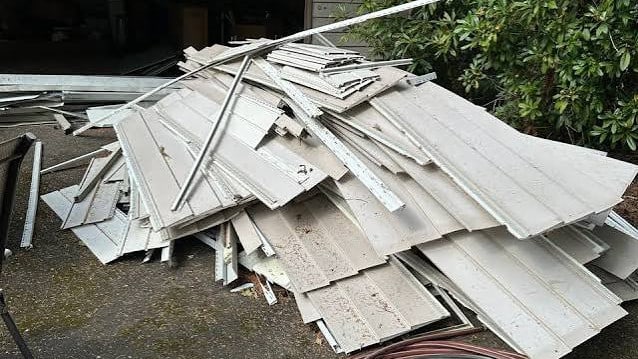
Waste is more than material that gets broken or damaged. It includes short pieces left after a cut that cannot be used elsewhere on the project. The shape of the home can therefore matter as much as its total wall area.
- Gables and angled walls: Each course changes length, creating cuts that may be difficult to reuse.
- Windows, doors, and dormers: More interruptions mean more short runs and more trimming.
- Color or profile changes: An offcut from one product cannot necessarily finish a wall using another.
- Short walls and bump-outs: Small sections can consume a surprising number of full-length panels.
- Damage and handling: Bent, scratched, or incorrectly cut pieces can add to the planned cut waste.
The PEPA vinyl siding installation manual describes the courses, openings, trim, and fitting details that drive many of these cuts. Check the current instructions for the exact product being installed.
Example: 20 Squares of Siding With 10% Added
If a contractor’s measured siding quantity is 20 squares, a 10% allowance adds 2 squares, for a preliminary order quantity of 22 squares. That is 2,200 square feet of material against 2,000 square feet of estimated coverage.
This is a takeoff example, not a prediction that exactly 200 square feet will go into a dumpster. Some extra panels may remain usable for a future repair. Before ordering, convert the estimate to the selected product’s actual carton or piece coverage and round to purchasable quantities. Count each profile and color separately.
Do Not Confuse Siding Waste With Missing Accessories
A 10% panel allowance will not make up for omitted corners, starter strip, J-channel, utility trim, soffit, or fascia. Measure those components by their own lengths or piece counts and add appropriate cutting allowances to each. PEPA’s estimating worksheet lists wall areas and individual accessories separately for this reason.
Product dimensions and installation details also vary. For example, ASCEND Composite Cladding’s installation guide provides its own system instructions. A vinyl estimate should not automatically be reused for composite cladding, steel, aluminum, or another profile. Confirm coverage, accessories, and packaging with the current product literature and your supplier.
How Can a Contractor Keep Waste Under Control?
- Measure each elevation, gable, dormer, and accent area separately.
- Plan course lengths and panel layout before committing to the order.
- Keep colors and profiles separate in the takeoff and cut plan.
- Set aside usable offcuts for short areas when the product and installation instructions permit.
- Confirm carton coverage, order increments, lead times, and any return terms before delivery.
- Record ordered, installed, damaged, returned, and leftover material after each job. Use that history to refine future allowances.
Thoughtful measurement and ordering can also reduce material sent to disposal. The U.S. EPA’s construction and demolition materials guidance identifies source reduction as an important way to prevent waste.
Review the Takeoff With a Local Siding Supplier
For contractors working in Davenport, Bettendorf, Moline, Rock Island, and surrounding Eastern Iowa and Western Illinois communities, Suburban Wholesale & Supply can help review the siding profiles and accessories in a proposed order. Bring the elevations, product choices, colors, and measurements so our Davenport team can help check coverage and available package quantities.
The contractor remains responsible for field measurements and the final installation takeoff. Our professional quoting team can help turn the material list into a clearer supplier quote. Request a quote online or call 563-391-4000 before your next siding job.
Industry Resources & References
- Polymeric Exterior Products Association — Vinyl Siding Estimating Worksheet
- Polymeric Exterior Products Association — Vinyl Siding Installation Manual
- LP Building Solutions — How to Measure for Siding
- ASCEND Composite Cladding — Installation Guide
- U.S. Environmental Protection Agency — Sustainable Management of Construction and Demolition Materials
Part of: Estimating & Ordering
More in Estimating & Ordering
- How to Avoid Jobsite Material Shortages | Suburban Wholesale & Supply
- How to Estimate Vinyl Siding Materials | Suburban Wholesale & Supply
- Daily Jobsite Material Delivery | Suburban Wholesale & Supply
- Why Next-Day Siding Delivery Saves Contractors Money
Upload your HOVER report and our wholesale team will turn it into a material quote within 24-48 hours. For next-day delivery, get your order in by 3pm the day before.
Share This Post
Share it on Facebook or X, or send it through your device share sheet for Instagram.