Calculating siding material cost per square requires more than dividing the panel price by 100 square feet. Learn how contractors should include siding, accessories, insulation, trim, waste, freight and delivery to build a more accurate material cost per square.
How Should Contractors Calculate Material Cost Per Square?
Contractors often talk about siding in terms of a price per square.
That can be useful, but it can also become misleading if the contractor only looks at the cost of the siding panels.
A true material cost per square should include everything required to put that square of siding on the wall.
That means siding panels, accessories, trim, insulation, waste, freight and delivery all need to be considered.
At Suburban Wholesale & Supply, we encourage contractors to calculate material cost per square using the complete wall system rather than simply the panel price.
First: What Is a Square?
In siding, one square typically represents:
100 square feet
If a house has 2,000 square feet of net siding area, that equals approximately 20 squares before considering waste and project-specific conditions.
The Simplest Formula
At its most basic, material cost per square can be calculated as:
Total Material Cost ÷ Total Installed Squares = Material Cost Per Square
The challenge is making sure the total material cost really includes everything.
Do Not Use Panel Price Alone
Suppose a siding panel costs $120 per square.
That does not mean your material cost is $120 per square.
You may also need:
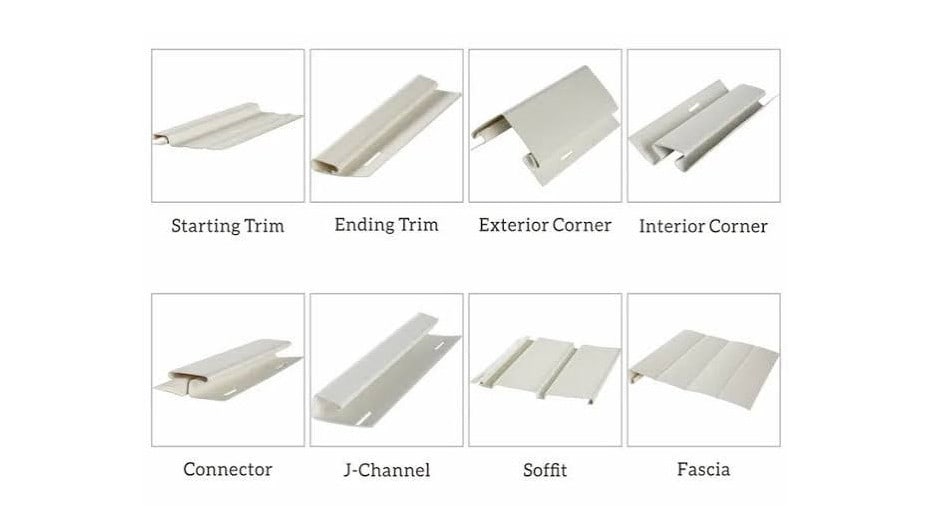
- Starter strip
- Outside corners
- Inside corners
- J-channel
- Utility trim
- Soffit
- Fascia
- Trim coil
- Insulation
- Fasteners
- Flashing
- Sealants
- Freight or delivery
The complete system cost is what matters.
Step 1: Calculate the Net Wall Area
Start with the total siding area of the project.
Measure each wall and account for:
- Wall width
- Wall height
- Gables
- Dormers
- Garage areas
- Other siding surfaces
Then subtract or account for openings according to your estimating method and the way your company handles waste.
Step 2: Add the Correct Waste Factor
Waste should not be guessed blindly.
It depends on:
- Wall layout
- Number of openings
- Gables
- Profile
- Board & batten layout
- Specialty products
- Cutoff reuse
For example, if a project has 20 net squares and you estimate 10% waste:
20 × 1.10 = 22 squares ordered
The exact percentage should be based on the specific product and project rather than applied automatically to every job.
Step 3: Add Accessory Cost
Accessories can materially change the true cost per square.
Include items such as:
- Starter strip
- Outside corners
- Inside corners
- J-channel
- Utility trim
- Window accessories
- Door accessories
- Soffit
- Fascia
- Trim coil
A house with many windows, corners and architectural details may have a higher accessory cost per square than a simple rectangular house.
Step 4: Add Insulation
If the project includes exterior insulation, calculate that separately and add it to the total material cost.
This may include products such as Progressive Foam or other compatible insulation systems.
Do not bury the insulation cost inside the siding panel number. Track it as its own component so you understand what the upgrade adds to the project.
Step 5: Add Fasteners, Sealants and Flashing
These items may seem small individually, but they add up.
Include:
- Nails or screws
- Sealants
- Flashing tape
- Housewrap accessories
- Water-management products
If the materials are required to complete the project, they belong in the material cost.
Step 6: Add Freight and Delivery
Freight and delivery should not disappear from the estimate.
Include:
- Supplier delivery charges
- Manufacturer freight
- Special-order freight
- Fuel surcharges when applicable
If the contractor picks up the material instead, the labor and truck expense should still be accounted for somewhere in the job costing.
Example Material Cost Per Square
Consider a hypothetical 20-square project.
| Material Category | Example Cost |
|---|---|
| Siding panels | $2,640 |
| Accessories | $950 |
| Insulation | $800 |
| Fasteners, sealants and flashing | $260 |
| Freight / delivery | $150 |
| Total Material Cost | $4,800 |
If the project is 20 installed squares:
$4,800 ÷ 20 = $240 material cost per square
That is very different from looking only at the panel price.
Calculate Installed-Square Cost, Not Just Ordered-Square Cost
This distinction matters.
If you buy 22 squares because of waste but only 20 squares are actually installed, dividing by 22 can make the material cost look artificially low.
For profitability analysis, divide total material cost by the actual installed project size.
Accessory Cost Per Square Can Vary Greatly
Two 20-square houses may not have the same material cost per square.
One may have:
- Four corners
- Few windows
- Simple elevations
Another may have:
- Ten corners
- Many windows and doors
- Multiple gables
- Board & batten accents
- Complex trim
The second project may carry a much higher material cost per square even though the net siding area is the same.
Separate Core Material From Upgrade Cost
When building pricing, it helps to know what each upgrade adds.
Track separately:
- Insulation upgrade
- Board & batten upgrade
- Premium color upgrade
- Steel siding upgrade
- Composite cladding upgrade
- Stone accent upgrade
This makes it easier to build a good-better-best sales presentation and understand the cost of each option.
Do Not Mix Labor Into Material Cost Per Square
Keep material and labor separate during job costing.
For example:
- Material cost per square
- Labor cost per square
- Total direct cost per square
Separating those categories makes it much easier to understand why a project performed well or poorly.
A Better Contractor Cost Formula
For material-only analysis:
Siding + Accessories + Insulation + Fasteners + Sealants + Flashing + Freight + Delivery
÷ Installed Squares
= True Material Cost Per Square
Track Material Cost by Product Type
Do not use one universal material cost for every siding product.
Maintain separate historical data for:
- Standard vinyl
- Premium vinyl
- Insulated siding systems
- Steel siding
- Aluminum siding
- Composite cladding
- Board & batten
That gives estimators a much stronger starting point when comparing future projects.
Track Material Cost by Job Complexity
Consider tagging completed jobs as:
- Simple
- Moderate
- Complex
Then compare material cost per square across those categories.
You may discover that complex homes consistently require more accessories and waste than simple ranch-style projects.
Compare Estimated Cost With Actual Cost
After each project, compare:
- Estimated siding quantity
- Actual siding quantity
- Estimated accessories
- Actual accessories
- Estimated waste
- Actual waste
- Estimated delivery
- Actual delivery
This is how estimating gets better over time.
Do Not Forget Leftover Material
If a project ends with significant unused material, decide how your company will account for it.
Possible approaches include:
- Return eligible material
- Move reusable stock into inventory
- Assign leftover material to another project
- Write off unusable or damaged material
If leftovers simply disappear into the warehouse without being tracked, your historical material-cost data becomes less accurate.
Price Changes Need to Flow Into Your Estimates Quickly
Material pricing changes over time.
That means contractors should not rely on an old cost-per-square figure indefinitely.
Update pricing when:
- Manufacturers increase prices
- Freight changes
- Premium colors change cost
- Accessories change price
- New products are introduced
Current estimates require current supplier pricing.
Material Cost Per Square Checklist
- Net wall area
- Waste factor
- Siding panels
- Starter
- Corners
- J-channel
- Utility trim
- Soffit
- Fascia
- Trim coil
- Insulation
- Fasteners
- Flashing
- Sealants
- Freight
- Delivery
- Special-order charges
- Premium color charges
- Leftover material
Your Distributor Can Help Improve the Number
A good building material distributor can help contractors build more accurate material estimates.
That may include:
- Current pricing
- Accessory pricing
- Product availability
- Lead times
- Special-order information
- Takeoff support
- Jobsite delivery
Better information before the job starts can reduce surprises after the project is underway.
Know the True Material Cost Before You Quote the Job
Suburban Wholesale & Supply works with contractors throughout Davenport, Bettendorf, Eldridge, Le Claire, DeWitt, Moline, Rock Island and surrounding Eastern Iowa and Western Illinois communities.
We stock contractor-focused exterior products, including 29 colors of .046 vinyl siding, along with accessories and additional siding materials.
If you are building an estimate, talk with us about current material pricing, accessory requirements, product availability and jobsite delivery before finalizing your numbers.
Call Nate or Andy, stop by the showroom, or visit Suburban Wholesale & Supply. The more accurately you calculate material cost per square, the more accurately you can price the entire siding project.
Sources & Contractor Resources
- Gentek Building Products — Siding product specifications, profiles, accessories and contractor resources. Gentek Building Products
- Polymeric Exterior Products Association — Technical and installation resources for polymeric exterior products. Polymeric Exterior Products Association
- National Association of Home Builders — Construction estimating, business management and contractor education resources. National Association of Home Builders
- Procore — Construction estimating, job costing and material-management resources. Procore
- ASCEND Composite Cladding — Product, accessory and installation information for composite cladding. ASCEND Composite Cladding
- Progressive Foam Technologies — Insulated siding and continuous insulation product resources. Progressive Foam Technologies
Part of: Estimating & Ordering
More in Estimating & Ordering
- How to Avoid Jobsite Material Shortages | Suburban Wholesale & Supply
- How to Estimate Vinyl Siding Materials | Suburban Wholesale & Supply
- Daily Jobsite Material Delivery | Suburban Wholesale & Supply
- Why Next-Day Siding Delivery Saves Contractors Money
Upload your HOVER report and our wholesale team will turn it into a material quote within 24-48 hours. For next-day delivery, get your order in by 3pm the day before.
Share This Post
Share it on Facebook or X, or send it through your device share sheet for Instagram.