Physical siding samples can make a kitchen-table presentation far more effective. Learn how contractors can compare vinyl, steel, aluminum and ASCEND Composite Cladding side by side using texture, profile, thickness, rigidity, construction and appearance to help homeowners understand the real differences.
How to Use Physical Samples to Compare Vinyl, Steel, Aluminum and ASCEND
Homeowners can read brochures all day and still struggle to understand the difference between siding materials.
Put four real siding samples on the kitchen table, and the conversation changes immediately.
Vinyl, steel, aluminum and ASCEND Composite Cladding look different, feel different and are built differently. A physical demonstration gives the homeowner a much better chance to understand those differences before price becomes the main topic.
At Suburban Wholesale & Supply, we encourage contractors to use physical samples as teaching tools—not props. The goal is not to overwhelm the homeowner with products. The goal is to help them understand which materials deserve serious consideration for their home.
Start With Four Representative Samples
You do not need an entire showroom on the kitchen table.
Start with one good representative sample from each category:
- Vinyl siding
- Steel siding
- Aluminum siding
- ASCEND Composite Cladding
Keep the first comparison simple.
Demonstration Rule: One strong sample from each category is more useful than twenty samples the homeowner cannot keep straight.
Make the Samples Large Enough to Matter
Tiny color chips are useful for color selection.
They are weak tools for material comparison.
A useful demonstration sample should allow the homeowner to see:
- The full profile
- The butt or lower edge
- The surface texture
- The locking area where practical
- The backing or construction where appropriate
Do Not Start With Price
If you begin by saying:
"This one is cheapest and this one is most expensive."
the homeowner may stop evaluating the products and start evaluating only the numbers.
First explain what is different.
Better Sequence: Appearance → Construction → Feel → Application → Price.
Step #1: Let the Homeowner Pick Up Each Sample
Do not keep the samples on your side of the table.
Let the homeowner handle them.
Ask them to notice:
- Weight
- Rigidity
- Surface feel
- Profile depth
- Overall construction
Physical interaction makes the comparison much easier to remember.
Step #2: Compare Appearance First
Put the four samples side by side.
Ask:
"Before we talk about what each material is made from, which appearance do you naturally like?"
This reveals design preferences before technical specifications influence the answer.
Step #3: Compare the Profiles
Hold the samples as they would appear on the wall.
Point out:
- Exposure
- Butt depth
- Shadow line
- Panel shape
- Surface texture
This helps the homeowner understand why two horizontal siding products can create very different-looking houses.
Step #4: Demonstrate Vinyl
Use vinyl as the familiar baseline.
Show:
- The panel face
- Locking system
- Nailing hem
- Profile and exposure
- Texture
Explain that vinyl remains a strong option because it provides a broad range of colors, profiles and price points with low-maintenance characteristics.
"Vinyl gives us a lot of design flexibility and a broad range of price points. The question isn't whether vinyl is good or bad—the question is whether this particular vinyl system matches what you want from the project."
Step #5: Demonstrate Aluminum
Put the aluminum beside the vinyl.
Let the homeowner feel the difference.
Point out:
- Metal construction
- Panel weight
- Surface finish
- Profile shape
- Smooth or woodgrain appearance depending on the product
Avoid presenting aluminum as an old-fashioned product simply because older aluminum siding remains common on existing homes.
"This gives us a metal siding option with a different feel and construction than vinyl. Depending on the profile and finish, aluminum can still make a lot of sense on the right project."
Step #6: Demonstrate Steel
Put the steel sample beside the aluminum.
Now the homeowner can compare two metal substrates directly.
Discuss:
- Steel construction
- Profile
- Finish system
- Rigidity
- Architectural appearance
Do not reduce the steel presentation to "it's stronger."
Sell appearance first, then explain the engineered construction behind the panel.
"Steel is our premium metal conversation. Look first at the profile and finish. Then we can talk about the steel construction and coating system behind it."
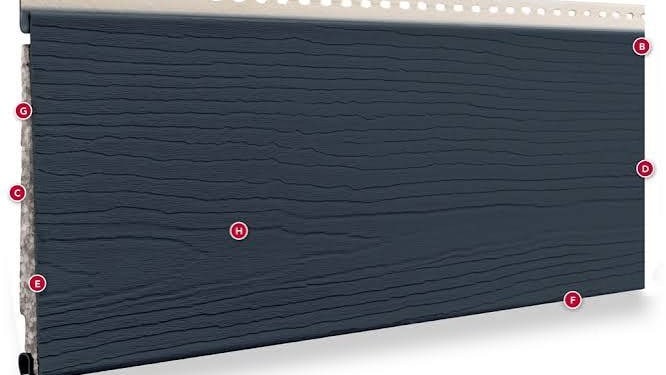
Step #7: Demonstrate ASCEND Composite Cladding
ASCEND should feel different the moment the homeowner picks it up.
Use that.
Point out:
- The dimensional exterior face
- The insulated backing
- Overall panel thickness
- Wood-inspired texture
- Available plank and board-and-batten design directions
The homeowner should understand that ASCEND is not simply thicker vinyl.
"This is a different construction altogether. ASCEND combines a formed composite exterior with insulated backing, so we typically present it to homeowners who want a more dimensional, premium exterior appearance."
Compare the Back of the Samples
Do not show only the finished face.
Turn the samples over.
The backside often makes the construction differences easier to explain.
Demonstration Tip: The front sells appearance. The back helps explain construction.
Compare Rigidity Without Abusing the Samples
It is useful to let the homeowner feel how the materials behave.
But do not turn the demonstration into a destructive strength test.
Gently handling and comparing the samples is enough to demonstrate differences in stiffness and construction.
Do Not Use Fake Impact Demonstrations
Avoid hitting samples with hammers or creating dramatic demonstrations that do not represent real-world conditions.
That may create more confusion than education.
Demonstrate what the product is. Do not invent a laboratory test at the kitchen table.
Compare Texture
Run a hand across each sample.
Show the homeowner how texture affects appearance.
Discuss:
- Smooth aluminum finishes
- Woodgrain aluminum
- Steel textures
- Vinyl woodgrain patterns
- ASCEND's more dimensional wood-inspired surface
Compare Shadow Lines
Hold each sample under the same room light.
Tilt it slightly.
Let the homeowner see how profile depth changes the amount of shadow created across the face.
This is especially useful when comparing a conventional vinyl profile with a more dimensional composite or metal profile.
Compare the Finished Edge
Look closely at the bottom edge or butt of each panel.
The shape of that edge contributes significantly to the way the siding looks from the street.
Explain this before focusing only on color.
Don't Compare Color Too Early
Material first.
Color second.
If you put dozens of colors on the table before the homeowner has narrowed the material, the presentation becomes unnecessarily complicated.
Narrow the material category before opening the full color deck.
Use Identical or Similar Colors When Possible
If you are comparing materials, try to use samples in reasonably similar color families.
A homeowner may naturally choose the sample with the color they prefer instead of evaluating the material itself.
Keep the material comparison as visually neutral as possible.
Use a Simple Side-by-Side Comparison
| Category | Vinyl | Aluminum | Steel | ASCEND |
|---|---|---|---|---|
| General Position | Value through premium | Metal alternative | Premium metal | Premium composite |
| Construction | Vinyl panel | Formed aluminum | Formed steel | Composite face with insulated backing |
| Appearance Conversation | Broad profile and color selection | Traditional and architectural metal looks | Crisp premium metal appearance | Dimensional wood-inspired appearance |
| Best Use in Presentation | Establish value and versatility | Introduce another metal option | Show premium metal construction | Show premium design and insulated construction |
Ask the Homeowner What They Notice
Do not do all the talking.
Ask:
- "Which one feels the most substantial to you?"
- "Which texture do you prefer?"
- "Which profile looks best?"
- "Which one looks most like what you want your house to become?"
Their answers tell you what matters to them.
Avoid Leading Questions
Do not ask:
"Doesn't this expensive one obviously feel better?"
Let the homeowner form their own opinion.
Then Explain What Their Preference Means
If the homeowner consistently prefers the depth and appearance of ASCEND, say so.
If they like vinyl and do not see enough value in the premium materials, that matters too.
"You've consistently preferred this profile and texture. That tells me we should probably spend more time looking at this material instead of continuing to compare everything."
Narrow to Two Finalists
A successful four-material demonstration should usually end with fewer choices.
Narrow to the two strongest candidates.
The purpose of showing four materials is not to create four proposals. It is to confidently eliminate the materials that do not fit.
Then Bring Out More Samples
Once the homeowner identifies the finalists, go deeper.
Now show:
- Additional profiles
- Full color selections
- Board-and-batten options
- Accent possibilities
- Trim coordination
Use Project Photos Immediately After the Samples
Physical samples answer:
"What does this material look and feel like?"
Project photos answer:
"What does it look like on a real house?"
Use Local Project Photos Whenever Possible
A Davenport homeowner benefits from seeing a real Davenport siding project.
A Bettendorf homeowner may connect more strongly with a completed Bettendorf exterior than with a national manufacturer photograph.
Build a local project library as your installations grow.
Use HOVER or Renderings After the Material Is Narrowed
The physical sample helps choose the material.
A rendering helps choose the design.
This is particularly useful when considering ASCEND horizontal plank, board-and-batten accents or mixed-profile designs.
Then Compare Investment
Once the homeowner understands the material differences, pricing becomes easier to discuss.
They are no longer comparing four unexplained numbers.
They are comparing different siding systems they have actually seen and handled.
Do Not Make the Most Expensive Sample Look Best on Purpose
Keep the demonstration fair.
Clean every sample.
Replace damaged samples.
Present each category professionally.
If a salesperson needs to make one product look bad to sell another, the demonstration is weak.
Keep Your Samples Current
Review sample kits regularly.
Remove:
- Discontinued products
- Discontinued colors
- Damaged samples
- Outdated literature
- Old warranty sheets
Build a Repeatable Demonstration
Every salesperson should present the materials in a similar sequence.
- Ask discovery questions.
- Introduce the four categories briefly.
- Put representative samples side by side.
- Compare appearance.
- Compare profile.
- Compare construction.
- Let the homeowner handle the samples.
- Ask which materials they prefer.
- Narrow to two finalists.
- Show project photos.
- Open the full color and profile discussion.
- Then discuss pricing.
A Better 60-Second Sample Demonstration
"I want you to actually feel the differences before we talk about price. This is vinyl, this is aluminum, this is steel and this is ASCEND Composite Cladding. Pick each one up and look at the profile, texture and construction. I'm not asking you to decide yet. I just want you to see why these are four different siding categories instead of four different prices for the same thing."
The Goal Is Understanding
A homeowner does not need to become a siding expert during one appointment.
They need enough understanding to make a confident decision.
The best physical sample demonstration makes a complicated siding decision feel simpler—not more complicated.
Build Better Siding Demo Kits With Suburban Wholesale & Supply
Suburban Wholesale & Supply works with professional siding contractors throughout Davenport, Bettendorf, Moline, Rock Island and the surrounding Quad Cities, Eastern Iowa and Western Illinois.
Contractors can use our showroom and team as a resource for Gentek vinyl, steel and aluminum siding, ASCEND Composite Cladding, samples, literature, color tools, product demonstrations and contractor sales training.
If your salespeople are trying to explain four siding materials with words alone, improve the demonstration. Put the products in the homeowner's hands, make the differences visible and use the samples to narrow the decision instead of complicating it.
Sources & Additional Resources
- Gentek Building Products — Product Directory: Current manufacturer reference for vinyl, steel and aluminum siding profiles, colors, specifications and product resources.
- Gentek Building Products — Vinyl Siding Resources: Manufacturer information regarding vinyl siding profiles, colors, construction and warranty resources.
- Gentek Building Products — Steel Siding Resources: Manufacturer information regarding steel siding profiles, finish systems, colors and product construction.
- Gentek Building Products — Aluminum Siding Resources: Manufacturer information regarding Cedarwood Aluminum, Woodgrain Series 2000, Deluxe Aluminum and current aluminum siding characteristics.
- Alside / ASCEND Composite Cladding — Product Resources: Manufacturer information regarding ASCEND Composite Cladding construction, insulated backing, plank and board-and-batten profiles, colors and warranty resources.
- Vinyl Siding Institute: Industry education regarding vinyl siding materials, professional installation and siding performance.
- Metal Construction Association: Industry educational resources regarding steel and other metal cladding systems, finishes and exterior applications.
- The Aluminum Association — Building & Construction: Industry information regarding aluminum characteristics and building applications.
Part of: ASCEND Composite Cladding
More in ASCEND Composite Cladding
- ASCEND vs. Steel vs. Vinyl Siding | Suburban Wholesale & Supply
- How to Position ASCEND Between Vinyl and More Expensive Exterior Cladding Options | Suburban Wholesale
- How to Demonstrate ASCEND Composite Cladding at the Kitchen Table | Suburban Wholesale
- How to Introduce ASCEND Composite Cladding During a Vinyl Siding Appointment | Suburban Wholesale
ASCEND samples and demo kits are available at the counter, and most are free. Call to check which ASCEND colors are on hand.
Share This Post
Share it on Facebook or X, or send it through your device share sheet for Instagram.