Extra siding can protect a job from shortages, but an oversized order can tie up cash, create handling and storage costs, and leave a contractor with material that cannot be returned or used elsewhere.
Contractor Estimating & Inventory Guide
Why Can Overordering Siding Cost Contractors Money?
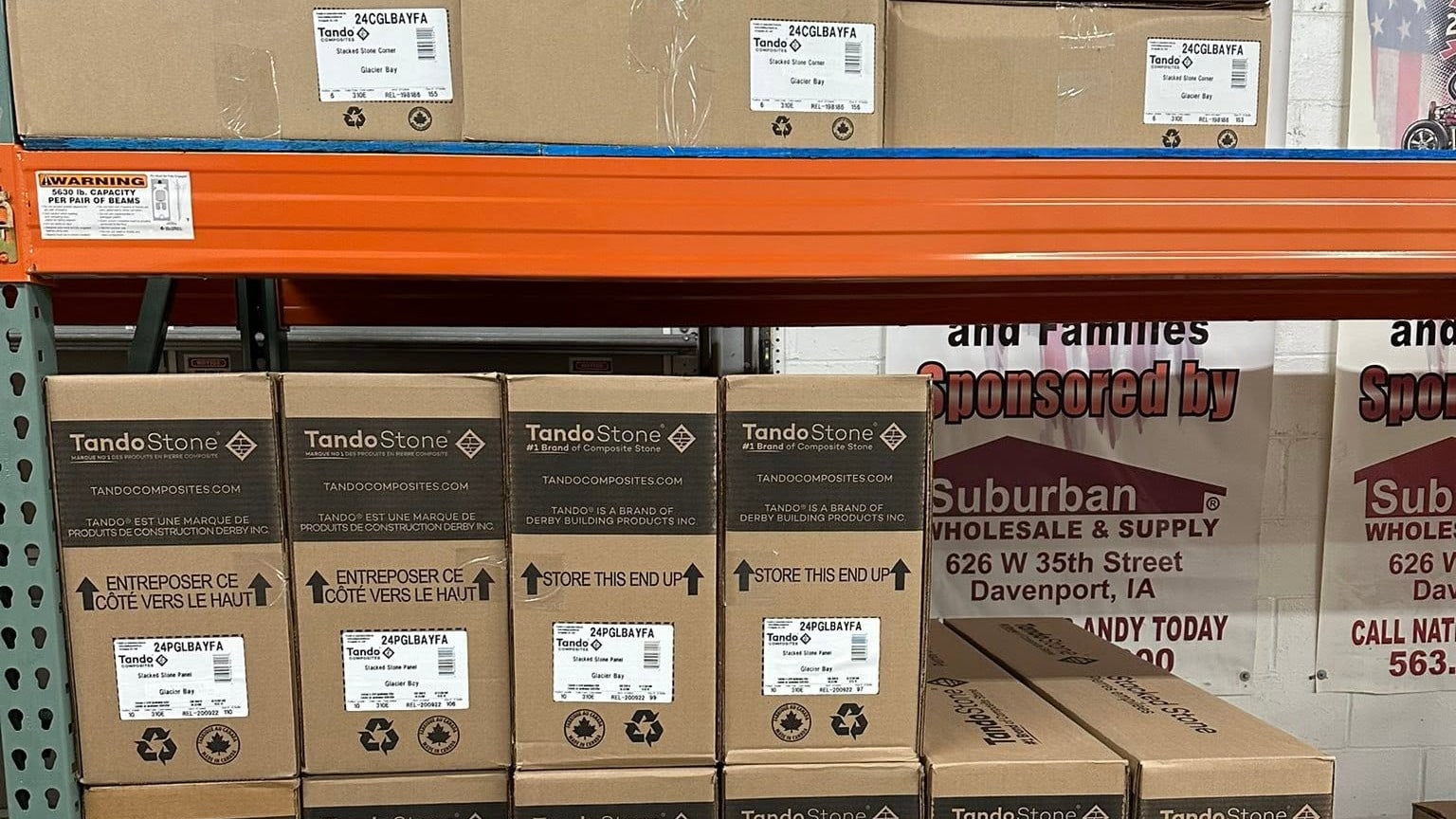
A reasonable amount of extra siding helps a crew finish a job without running short. Buying far more than the project needs creates a different problem: money leaves the business for panels that may sit in a trailer, fill warehouse space, or prove difficult to return. Good estimating finds the amount needed for coverage and realistic cuts, then checks how the product is packaged and sold.
Extra Material Is Not the Same as an Excess Order
Every siding takeoff needs to account for cuts, breakage, and the shape of the house. The Polymeric Exterior Products Association (PEPA) estimating worksheet uses a 10% allowance for vinyl siding material waste. That is a starting point for that kind of takeoff, not a rule that every product or elevation will consume exactly 10% extra.
The contractor should review the actual walls, gables, openings, colors, and profiles. A measured allowance helps cover expected cuts. Cartons added without checking the layout, carton coverage, or material already on hand may simply create surplus.
Overordering Ties Up Working Cash
A contractor pays for extra siding before knowing whether it can be returned or used on another job. That cash is unavailable for payroll, fuel, permits, equipment, or the next material order while the product sits unused. This is especially noticeable when the surplus is an uncommon profile, accent color, or special-order item.
Inventory has a carrying cost even when no one writes a separate check labeled “storage.” SCORE’s inventory-management discussion identifies excess stock, storage, and write-downs as costs businesses should monitor. For a siding contractor, the practical question is whether the added material protects this job enough to justify the cash it occupies.
A Return Is Never Safe to Assume
Return terms depend on the supplier, product, condition, packaging, order type, and timing. An unopened stock carton may be handled differently from a special-order color, a damaged carton, or loose accessories. Freight or restocking charges may also affect the credit. Ask for the terms applicable to the exact items before placing the order.
Do not build a bid on the assumption that every unused panel will be refunded at its full purchase price. If the surplus cannot be returned, it remains a cost of that project unless it can be properly assigned and used on another one.
What Does One Extra Carton Really Cost?
The invoice price is the starting point. Then consider any added delivery or pickup, labor to unload and move it, storage space, time spent reconciling a return, and the risk of damage. If the carton is returnable, subtract the actual credit and include applicable fees. If it will be used on another job, transfer its cost to that job in your records instead of treating it as free material.
This is a job-costing calculation, not an argument to order too tightly. A shortage can be more expensive than a sensible safety allowance. The answer depends on the product, availability, layout, and the contractor’s actual experience with similar work.
Unused Siding Still Needs Protection
Panels kept for a future project require suitable space and handling. The PEPA vinyl siding installation manual calls for cartons to be kept flat, supported along their length, dry, and away from activity that could damage them. It also warns against storage locations that can become excessively hot.
A carton left where it can be bent, soaked, scratched, misplaced, or exposed to unsuitable heat may lose the value the contractor hoped to recover. Follow the current manufacturer instructions for the specific siding material; vinyl, steel, aluminum, and composite products may have different handling requirements.
Leftovers May Not Fit the Next Job
A contractor cannot assume that a future homeowner will choose the same color, profile, and accessory package. Before carrying a surplus as useful inventory, label its manufacturer, product line, color, profile, and quantity. Keep track of where it is stored and whether it is suitable for the intended future use.
If material cannot be used or returned, it may become waste. The U.S. Environmental Protection Agency’s construction and demolition materials guidance identifies source reduction as a way to avoid generating excess material in the first place. Accurate purchasing can help both the contractor’s budget and the disposal stream.
A Better Preorder Review
- Measure each elevation, gable, and accent area instead of relying only on a whole-house square count.
- Separate every color and profile; plan likely cuts and usable offcuts.
- Confirm the selected product’s actual piece or carton coverage and purchasing increments.
- Add a waste allowance suited to the product and complexity of the house.
- Count starter, corners, J-channel, utility trim, soffit, and other accessories separately.
- Check what matching material is already in inventory and whether it is usable.
- Confirm availability, lead times, delivery plans, and return terms with the supplier.
The U.S. Small Business Administration’s break-even guidance highlights the value of including all relevant costs when judging whether a price protects the business. A careful material order is part of that calculation.
Order for the Job With Suburban Wholesale & Supply
Suburban Wholesale & Supply helps contractors serving Davenport, Bettendorf, Moline, Rock Island, and surrounding Eastern Iowa and Western Illinois communities review siding and accessory options. Bring your elevations, measurements, colors, and profiles to our Davenport team. We can discuss package quantities, current availability, delivery, and the return terms for the items you are considering.
The contractor remains responsible for field measurements and the final installation takeoff. Our professional quoting service can help turn a detailed material list into a supplier quote. Request a quote online or call 563-391-4000 to plan your next siding package.
Industry Resources & References
- Polymeric Exterior Products Association — Vinyl Siding Estimating Worksheet
- Polymeric Exterior Products Association — Vinyl Siding Installation Manual
- SCORE — Inventory Management: Is It Time for a Change?
- U.S. Environmental Protection Agency — Sustainable Management of Construction and Demolition Materials
- U.S. Small Business Administration — Break-even Point
Part of: Estimating & Ordering
More in Estimating & Ordering
- How to Avoid Jobsite Material Shortages | Suburban Wholesale & Supply
- How to Estimate Vinyl Siding Materials | Suburban Wholesale & Supply
- Daily Jobsite Material Delivery | Suburban Wholesale & Supply
- Why Next-Day Siding Delivery Saves Contractors Money
Upload your HOVER report and our wholesale team will turn it into a material quote within 24-48 hours. For next-day delivery, get your order in by 3pm the day before.
Share This Post
Share it on Facebook or X, or send it through your device share sheet for Instagram.