Compare Gentek vinyl siding and James Hardie fiber cement using VSI certification, ASTM standards, manufacturer specifications, appearance, fire performance, maintenance, warranties, installation, and total ownership cost.
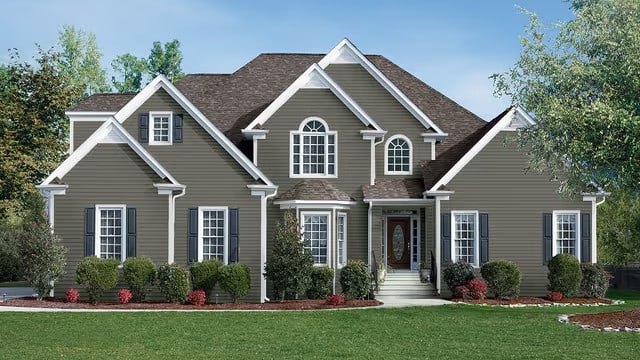
Vinyl and Fiber Cement Siding Comparison
Gentek Vinyl Siding vs. James Hardie Fiber Cement: A Positive, Standards-Based Comparison
Gentek vinyl siding and James Hardie fiber cement can both create attractive, durable home exteriors. They accomplish that through fundamentally different materials, installation systems, maintenance requirements, performance standards, and ownership costs.
Gentek is especially attractive for homeowners who prioritize low maintenance, moisture resistance, integrated color, local availability, and freedom from repainting. James Hardie is a strong choice for homeowners who want a substantial painted-board appearance, noncombustible cladding, multiple architectural formats, and the ability to repaint the exterior in a different color later.
The Most Important Difference
This is not a comparison between two vinyl siding brands. Gentek Sequoia Select is rigid PVC vinyl siding. James Hardie siding is fiber cement manufactured from a cementitious formulation reinforced with cellulose fibers.
Because the materials are different, they are evaluated under different standards. ASTM D3679 and the VSI Product Certification Program apply to qualifying rigid vinyl siding. They do not apply to James Hardie fiber cement.
The comparison must remain category-correct:
Gentek should be evaluated using vinyl siding standards, current VSI certification listings, ASTM test methods, and Gentek specifications. James Hardie should be evaluated using fiber-cement standards, ICC-ES reports, HardieZone-specific installation instructions, finish requirements, and written warranties.
The Short Answer
Gentek is generally the stronger choice when a homeowner wants a lighter exterior system that does not absorb water, cannot rot, never requires routine painting, and is relatively easy to clean and maintain.
James Hardie is generally the stronger choice when the homeowner wants a substantial painted-fiber-cement appearance, noncombustible cladding, wider board choices, architectural panels, or the ability to repaint the home later.
The honest conclusion:
Neither product is universally better. Gentek minimizes long-term maintenance and moisture concerns. James Hardie provides noncombustibility and a more substantial painted-board appearance. The best choice depends on design priorities, fire exposure, maintenance tolerance, installation expertise, local availability, and total project budget.
Applicable Standards and Technical Documentation
| Standard or Report | Gentek Vinyl Siding | James Hardie Fiber Cement |
|---|---|---|
| ASTM D3679 | Applicable to qualifying rigid PVC vinyl siding | Not applicable to fiber-cement siding |
| ASTM D5206 | Used to evaluate negative wind-load resistance of rigid vinyl siding | Not the primary HardiePlank wind-evaluation method |
| ASTM D4756 | Industry-recognized installation practice for rigid vinyl siding and soffit | James Hardie product- and climate-specific instructions govern installation |
| VSI Product Certification | Applies to qualifying Gentek vinyl siding products and colors | Does not apply to fiber cement |
| ASTM C1186 | Not applicable to conventional vinyl siding | Standard specification for non-asbestos fiber-cement sheets |
| ASTM E136 | Gentek vinyl should not be represented as noncombustible | James Hardie identifies its fiber-cement siding as complying with ASTM E136 as noncombustible cladding |
| ICC-ES ESR-2290 | Not the primary Gentek vinyl siding evaluation document | Provides code-evaluation information for qualifying James Hardie products and assemblies |
Applying ASTM D3679 or VSI certification to James Hardie would be technically incorrect. Likewise, applying ASTM C1186 fiber-cement requirements to Gentek vinyl siding would be inappropriate.
Product Construction
Gentek Sequoia Select
- Rigid PVC vinyl construction
- Nominal .046-inch horizontal panel thickness
- Full-roll nailing hem
- Exclusive Advantage Lock system
- Full 3/4-inch lap projection
- Low-gloss cedar-grain texture
- Integral color that does not require routine painting
- ChromaTrue technology on designated darker colors
James Hardie Siding
- Fiber-cement construction
- HardiePlank lap siding in multiple widths and exposures
- Select Cedarmill and smooth textures
- Beaded and custom profile options in applicable markets
- HardiePanel vertical siding
- Hardie Architectural Panels
- Primed-for-paint and ColorPlus factory-finished choices
- Climate-specific product and installation systems
Thickness measurements should not be compared directly. A .046-inch vinyl panel and a fiber-cement plank are different materials with different weight, attachment, handling, moisture, and structural characteristics.
Appearance and Architectural Style
Gentek’s Appearance
Sequoia Select uses a low-gloss cedar-grain texture and a full 3/4-inch projection to create defined shadow lines. The collection includes traditional clapboard, Dutch-lap, and vertical Board and Batten choices.
- Consistent factory-manufactured appearance
- Multiple horizontal profiles
- Vertical Board and Batten option
- Integrated classic and designer colors
- Coordinated siding, soffit, trim, fascia, and accessories
- No field painting required
James Hardie’s Appearance
HardiePlank is thicker and more board-like at close range. James Hardie also offers architectural panels, vertical siding, shakes, trim, smooth textures, and deeper Artisan profiles for more custom exterior designs.
- Substantial painted-board appearance
- Multiple plank widths and exposures
- Smooth and textured options
- Architectural panel systems
- Factory-finished and field-painted choices
- Can be repainted in a different color
Aesthetic advantage:
James Hardie generally provides the more substantial painted-board appearance at close range and offers greater architectural-panel flexibility. Gentek creates attractive wood-inspired curb appeal while eliminating the recurring maintenance cycle of a painted exterior.
Moisture Performance and Water Management
Gentek vinyl siding does not absorb water and cannot rot. That is a meaningful advantage in Iowa and Illinois, where siding is exposed to humidity, snow, wind-driven rain, and repeated freeze-thaw cycles.
Vinyl siding is not the home’s primary waterproofing layer. A correctly installed water-resistive barrier, window and door flashing, kickout flashing, and drainage system remain essential.
James Hardie markets its fiber-cement products as resistant to moisture damage. However, installation instructions still require disciplined storage, clearances, flashing, fastening, cut-edge treatment, joint details, and paint or ColorPlus touch-up procedures.
Depending on the exact product and application, Hardie instructions may require:
- Keeping products dry before installation
- Using the required water-resistive barrier
- Maintaining clearance from finished grade
- Maintaining clearance from roofs, decks, paths, and steps
- Using Z-flashing at required horizontal transitions
- Providing kickout flashing at roof-to-wall intersections
- Treating applicable field-cut edges
- Using approved caulks where specified
Gentek is more forgiving of direct moisture exposure because it cannot rot. James Hardie can perform extremely well, but correct clearance and flashing details remain critical.
Fire Performance
Fire performance is one of James Hardie’s clearest material advantages. James Hardie states that its fiber-cement siding complies with ASTM E136 as noncombustible cladding.
Gentek vinyl siding should not be described as noncombustible. Vinyl and fiber cement belong to different material and fire-performance categories.
Noncombustible cladding does not make the entire wall assembly fireproof. Sheathing, insulation, house wrap, framing, windows, soffits, coatings, penetrations, and adjacent construction all affect the assembly’s performance. Nevertheless, for projects where noncombustibility is a primary requirement, James Hardie has the clear advantage.
Maintenance Comparison
| Maintenance Area | Gentek Vinyl Siding | James Hardie Fiber Cement |
|---|---|---|
| Routine painting | Not required | Primed products require painting; factory finishes eventually require inspection and may require repainting |
| Caulk inspection | Primarily required at applicable penetrations and adjoining materials | Required at product-specific joints, penetrations, trim, and transitions |
| Cut edges | Do not require field painting | Must receive the specified treatment for the selected product and finish |
| Cleaning | Typically cleaned with a garden hose and mild cleaning solution | Requires manufacturer-approved cleaning methods that protect the finish |
| Future color changes | A major color change generally requires siding replacement | Can be repainted using a compatible exterior coating |
Gentek provides the lower-maintenance ownership experience. James Hardie provides greater future color flexibility, but repaintability carries future labor and coating costs.
Color and Finish Comparison
Gentek ChromaTrue and Color Clear Through
Gentek offers integral siding colors that do not require routine painting. Designated darker colors use ChromaTrue fade-defying technology. Gentek’s Color Clear Through system helps coordinate selected siding, soffit, fascia, trim, aluminum, steel, and rainware products.
James Hardie ColorPlus
ColorPlus Technology is a factory-applied, baked-on finish designed for color consistency, adhesion, and durability. James Hardie states that qualifying ColorPlus finishes are backed by a 15-year limited finish warranty covering paint and labor, subject to the complete terms.
The practical finish difference:
Gentek’s color is part of the vinyl material and does not require a recurring paint system. ColorPlus is a durable factory-applied coating on fiber cement. It offers a painted appearance and strong initial consistency, but it remains a coating that must be inspected and maintained over the life of the home.
Impact and Hail Considerations
Gentek vinyl siding is evaluated for impact resistance under the applicable ASTM D3679 requirements. Sequoia Select’s extra-heavy .046-inch construction provides greater rigidity than many thinner vinyl panels.
James Hardie’s dense fiber-cement construction can provide strong resistance to routine impacts, but the material can crack, chip, or break if mishandled during transportation, cutting, or installation. Edge and corner protection are especially important before the product is secured to the wall.
Neither material should be described as hail-proof. Severe hail can damage vinyl, fiber cement, roofing, windows, metal, and other exterior products. Review the written warranty remedies and exclusions rather than relying on a general claim of toughness.
Wind Performance
Gentek states that Sequoia Select has been tested for negative wind-load resistance under ASTM D5206 and meets or exceeds the applicable industry standard.
James Hardie wind resistance is determined through product-specific fastening schedules, substrate requirements, building height, stud spacing, fastener type, fastener penetration, and the applicable ICC-ES report or code documentation.
The attachment methods are fundamentally different. Gentek vinyl siding is hung through elongated nail slots so it can move as temperatures change. HardiePlank is mechanically fastened according to its fiber-cement installation schedule.
For either product, verify:
- The exact product and profile
- The tested design pressure
- The approved substrate and framing
- The required fastener type, spacing, and penetration
- Building height and exposure category
- Field, edge, and corner-zone pressures
- Applicable local building-code requirements
- The current manufacturer installation instructions
Wind performance belongs to the complete tested wall assembly—not simply the siding material.
Installation Differences
Installing Gentek Vinyl Siding
Vinyl siding must remain free to expand and contract. Fasteners are positioned within elongated nail slots and should not be driven tightly against the nail hem.
- Center fasteners correctly in the nail slots
- Do not overdrive fasteners
- Provide specified clearances inside receiving channels
- Fully engage panel locks without stretching panels upward
- Follow temperature-specific overlap requirements
Installing James Hardie
Fiber cement is heavier and requires specialized handling, cutting, fastening, flashing, joint, and finish procedures. James Hardie instructions also contain important silica-dust safety requirements.
- Store products flat, covered, and dry
- Use Hardie-approved cutting and dust-control methods
- Use the specified corrosion-resistant fasteners
- Follow the required fastener schedule and penetration
- Maintain required clearance from grade, roofs, decks, and hard surfaces
- Install specified flashing at openings and horizontal transitions
- Treat applicable field-cut edges
- Use compatible paint and sealants where required
James Hardie can deliver excellent results, but its labor, handling, safety, flashing, and finishing requirements are more demanding than a typical vinyl siding installation.
Warranty Comparison
Gentek states that Sequoia Select is backed by a lifetime limited, non-prorated, transferable warranty with hail protection and lifetime fade coverage, subject to the complete written terms.
James Hardie states that qualifying siding, trim, and soffit products are backed by a transferable 30-year non-prorated limited substrate warranty. Qualifying ColorPlus finishes carry a separate 15-year limited finish warranty covering paint and labor, subject to the written terms.
| Warranty Area | Gentek Sequoia Select | James Hardie |
|---|---|---|
| Published substrate coverage | Lifetime limited, non-prorated, and transferable, subject to terms | Thirty-year non-prorated transferable limited substrate warranty |
| Finish coverage | Lifetime fade coverage identified for Sequoia Select, subject to terms | Separate 15-year ColorPlus limited finish warranty on qualifying products |
| Repainting | Routine repainting is not required | Primed products must be painted; ColorPlus may eventually require repainting |
| Installation dependency | Correct vinyl installation is required | Product-specific fastening, clearances, flashing, finish, and safety requirements are critical |
Do not rank these warranties using the words “lifetime,” “30-year,” or “15-year” alone. Compare the covered component, remedy, labor coverage, transfer provisions, exclusions, and maintenance obligations.
Initial Cost and Total Cost of Ownership
James Hardie usually requires heavier material handling, specialized cutting equipment, dust control, more detailed flashing, specific fasteners, field painting when primed products are selected, and additional labor. These requirements commonly increase the installed cost.
Gentek vinyl siding uses lighter panels, requires no field painting, and eliminates future repainting cycles. A premium vinyl product can therefore offer a lower initial and long-term ownership cost.
A complete comparison should include siding, trim, house wrap, flashing, fasteners, caulk, paint, equipment, waste, delivery, installation labor, future repainting, repairs, and maintenance—not merely the material price per square.
Which Product Is the Better Fit?
Gentek May Be the Better Fit When:
- You want to avoid routine repainting
- Low maintenance is the leading priority
- You want siding that cannot absorb water or rot
- You prefer Sequoia Select’s .046-inch construction
- Coordinated siding and accessories are important
- The required colors are stocked locally
- Fast delivery and replacement access matter
- Lower total ownership cost is a priority
James Hardie May Be the Better Fit When:
- Noncombustible cladding is a priority
- You want a substantial painted-board appearance
- You want smooth, Artisan, or architectural-panel options
- You want the ability to repaint the exterior
- The installer specializes in fiber cement
- The project supports the required clearances and flashing
- You accept future finish inspection and repainting
- The higher installed cost fits the budget
Final Gentek vs. James Hardie Comparison
Gentek and James Hardie are both credible exterior cladding choices, but they serve different priorities.
James Hardie provides a substantial fiber-cement appearance, noncombustible cladding, architectural versatility, and strong substrate and factory-finish warranties. Its weight, cutting requirements, silica precautions, flashing details, finish maintenance, and labor requirements must be included in the decision.
Gentek provides a lighter, lower-maintenance exterior that does not absorb water, cannot rot, and never requires routine painting. Premium Sequoia Select adds .046-inch construction, a full-roll nail hem, Advantage Lock, deep projection, premium colors, and coordinated accessories.
Choose James Hardie when noncombustibility and painted fiber-cement aesthetics justify the added installation and maintenance requirements. Choose Gentek when moisture resistance, low maintenance, efficient installation, local availability, and lower long-term ownership costs are the stronger priorities.
Compare Siding Systems With a Local Expert
Suburban Wholesale & Supply helps Quad Cities contractors, builders, and homeowners evaluate siding based on the complete wall system—not a single marketing claim. Our team can help compare material type, profiles, colors, standards, installation requirements, maintenance, warranty coverage, delivery, and product availability.
Contact our Davenport team to determine whether a low-maintenance Gentek vinyl siding system or an alternative cladding best fits your project.
Technical References
- Polymeric Exterior Products Association — VSI Product Certification Program
- ASTM International — ASTM D3679, Standard Specification for Rigid PVC Siding
- Gentek — Sequoia Select Manufacturer Specifications
- James Hardie — HardiePlank Product Information and Manufacturer Specifications
- ICC Evaluation Service — James Hardie ESR-2290
- James Hardie — HZ5 Installation, Clearance, Flashing, and Safety Requirements
- James Hardie — ColorPlus Technology and Warranty Information
Product specifications, profiles, colors, code reports, and warranties can change. Confirm current information using manufacturer instructions, applicable building codes, current VSI certification listings for vinyl products, ICC-ES reports for fiber cement, and complete written warranties before specifying or installing either siding system.
Contractor Notes
We‘re here to help.
Suburban Wholesale & Supply works with contractors, remodelers, builders, and property professionals across Davenport, Bettendorf, Moline, Rock Island, and the wider Quad Cities. If Gentek Vinyl Siding vs. James Hardie | Expert Guide affects a project you are pricing, our team can help compare product lines, confirm available options, and prepare a quote that fits the opening, exterior, or jobsite requirements.
Our counter and showroom teams support window, patio door, entry door, storm door, siding, trim coil, gutter protection, and accessory orders every week. We can talk through manufacturer differences, color and finish selections, installation details, lead times, and documentation so you can give your customer clear answers before the work begins.
For current availability, contractor pricing, product literature, or help matching this topic to a real project, contact Suburban Wholesale & Supply or send the details through our quote form. We will help you move from product research to an accurate material order with fewer surprises.
Share This Post
Share it on Facebook or X, or send it through your device share sheet for Instagram.