Choosing the right Gentek aluminum siding profile is about more than picking a product. Learn how contractors should compare Double 4-inch, Double 5-inch and 8-inch clapboard profiles based on home size, architecture, texture, shadow lines and homeowner design goals.
How to Choose a Gentek Aluminum Profile for a Home
Choosing aluminum siding should involve more than selecting a color.
The profile matters too.
The width of the siding exposure, the number of horizontal lines across the wall, the texture of the panel and the depth of the butt can significantly change how a finished exterior looks.
At Suburban Wholesale & Supply, we encourage contractors to stop treating profile selection as a technical specification buried on the proposal. Put the profiles in front of the homeowner and explain what each one will do to the appearance of the house.
Start With the Current Gentek Aluminum Profile Choices
Gentek's aluminum siding lineup gives contractors several distinctly different horizontal profile choices.
- Deluxe Aluminum — Double 4-inch Clapboard
- Deluxe Aluminum — 8-inch Single Clapboard
- Woodgrain Series 2000 — Double 4-inch Clapboard
- Cedarwood Aluminum — Double 5-inch Clapboard
Those are not simply four SKUs. They create different proportions, textures and design opportunities.
What Does "Exposure" Mean?
Homeowners usually do not know what siding exposure means.
Explain it simply:
"Exposure is the amount of each siding course you see once the siding is installed. A smaller exposure creates more horizontal lines across the house. A larger exposure creates fewer, broader lines."
Once homeowners understand that concept, profile selection becomes much easier.
Double 4-Inch Clapboard: A Traditional Scale
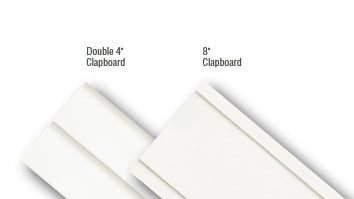
A Double 4-inch profile creates two 4-inch exposures per siding panel.
Gentek currently offers a Double 4-inch profile in both Deluxe Aluminum and Woodgrain Series 2000.
This profile creates more horizontal lines across the elevation and can provide a traditional residential appearance.
Double 4 may be particularly appropriate when:
- The homeowner likes traditional clapboard proportions.
- The existing siding already has a relatively narrow exposure.
- The home has smaller elevations.
- The homeowner wants more horizontal detail across the wall.
- The architecture benefits from a finer siding scale.
Deluxe Double 4 vs. Woodgrain Series 2000 Double 4
Profile size alone does not determine the finished look.
Deluxe Double 4 uses a smooth texture.
Woodgrain Series 2000 uses a woodgrain texture.
The exposure is similar, but the visual character can be very different.
Ask the homeowner:
- Do you prefer a smooth siding surface?
- Do you prefer a visible woodgrain texture?
- Which looks better with your home's architecture?
- Which works better with your brick, stone or trim?
Same exposure does not mean same appearance. Texture can dramatically change how a profile reads on the wall.
Double 5-Inch Clapboard: A Slightly Broader Scale
Gentek Cedarwood Aluminum uses a Double 5-inch clapboard profile.
That means each panel creates two 5-inch exposures.
Compared with Double 4, the wider exposure creates fewer horizontal lines across the elevation and gives each clapboard course more visual presence.
Double 5 may deserve consideration when:
- The homeowner wants a slightly broader horizontal profile.
- The home has larger uninterrupted wall areas.
- The siding is intended to become a stronger part of the design.
- The homeowner likes Cedarwood's variegated appearance.
- A wider profile better balances large windows or architectural features.
8-Inch Single Clapboard: The Broadest Gentek Aluminum Look
Deluxe Aluminum also gives contractors an 8-inch single clapboard profile.
Instead of two smaller exposures per panel, this profile creates one broad 8-inch exposure.
That substantially reduces the number of horizontal lines across the wall.
An 8-inch exposure may work especially well when:
- The homeowner likes broad horizontal siding lines.
- The house has larger elevations.
- The design calls for a cleaner, less busy exterior.
- The homeowner prefers a smooth siding surface.
- The scale of the house can comfortably support a larger exposure.
Smaller Exposure Means More Lines
This is the simplest profile lesson a contractor can teach.
Smaller exposure = more horizontal lines.
Larger exposure = fewer horizontal lines.
Neither is automatically better.
The question is which proportion works better on the house.
Step Back From the House Before Choosing
Don't choose a siding profile entirely at the kitchen table.
Walk outside and evaluate the building.
Look at:
- Overall height of the home
- Length of the elevations
- Window sizes
- Window spacing
- Existing brick or stone
- Roof mass
- Porches and additions
- Current siding exposure
The same profile can look very different on a small ranch than it does on a large two-story home.
Think About the Existing Architecture
Profile selection should support the architecture instead of fighting it.
A traditional home may look natural with a Double 4 clapboard. A larger ranch or broad two-story elevation may benefit from a wider profile. A home where the siding itself is meant to contribute more visual character may be a strong Cedarwood candidate.
These are design considerations—not rigid rules.
Don't Assume a Ranch Automatically Needs a Wide Profile
Contractors sometimes create rules such as:
"Ranches get wide siding. Two-story homes get narrow siding."
That's too simplistic.
A ranch with lots of windows, brick and architectural breaks may look better with a smaller-scale profile. A large, simple elevation may benefit from a broader exposure.
Look at the actual house instead of applying a memorized rule.
Think About Window Size and Spacing
Windows divide the siding field.
On a home with many smaller windows, a very wide siding exposure may interact differently with those openings than a narrower profile.
On a large uninterrupted wall, wider exposures can sometimes help reduce the number of visual lines.
The goal is balance.
Consider Brick and Stone
Siding does not exist by itself.
If a home already has brick or stone, determine whether the siding should quietly support that material or become a stronger design element.
A traditional solid-color Double 4 may keep the masonry as the dominant feature. Cedarwood's Double 5 profile and variegated appearance can create more visual activity.
Neither approach is automatically right.
Profile and Texture Need to Be Chosen Together
Don't separate exposure from texture.
Gentek's current aluminum choices include:
- Deluxe D4: smaller exposure with smooth texture.
- Deluxe 8-inch: broad exposure with smooth texture.
- Woodgrain 2000 D4: smaller exposure with woodgrain texture.
- Cedarwood D5: medium-width exposure with woodgrain texture and variegated colors.
That creates four noticeably different design directions even though all four are aluminum siding.
All Four Profiles Use a Deep 1/2-Inch Butt
Gentek specifies a 1/2-inch butt height across these aluminum siding profiles.
That butt depth helps create shadow and dimension.
Turn the samples sideways and show the homeowner.
If a feature can be demonstrated physically, demonstrate it. Don't bury the homeowner in specifications.
Color Can Change How a Profile Feels
Exposure is only one part of the visual equation.
Light colors, dark colors, smooth finishes, textured finishes and variegated colors can all change how strongly the horizontal lines appear.
That's why contractors should avoid selecting profile and color independently.
Put the actual color and profile combination together before the final decision.
Take the Samples Outside
Gentek recommends using actual product samples for final color selection because screens can display colors differently.
The same principle should apply to profile evaluation.
Take several samples outside and look at them:
- Against the house
- From several feet away
- Next to brick or stone
- Near windows
- In direct sunlight
- In shade
Use the Gentek Visualizer
Physical samples are excellent for texture, finish and color.
Visualization tools help homeowners understand scale across an entire house.
Use the Gentek Visualizer to compare siding options on a house image, then use physical samples to confirm the final selection.
Gentek Aluminum Profiles at a Glance
| Product | Profile | Texture | Design Direction |
|---|---|---|---|
| Deluxe Aluminum | Double 4-inch | Smooth | Traditional scale with a clean smooth surface |
| Deluxe Aluminum | 8-inch Single | Smooth | Broad horizontal exposure with fewer siding lines |
| Woodgrain Series 2000 | Double 4-inch | Woodgrain | Traditional scale with more surface texture |
| Cedarwood Aluminum | Double 5-inch | Woodgrain | Broader wood-inspired appearance with variegated colors |
Five Questions That Help Choose the Profile
- Do you prefer a smooth or woodgrain siding surface?
- Do you prefer more horizontal lines or broader siding courses?
- Do you want a classic solid color or more variegated color variation?
- Which profile looks most proportionate to the size and architecture of the house?
- Which product and profile combination actually comes in the color you want?
A Simple Kitchen-Table Profile Presentation
- Ask what the homeowner likes about their existing siding exposure.
- Ask what they would like to change.
- Put the D4, D5 and 8-inch samples on the table.
- Explain exposure in simple language.
- Compare smooth and woodgrain textures.
- Turn each sample sideways and show the butt depth.
- Compare current colors.
- Walk outside and look at the scale of the home.
- Compare the profiles against existing brick, stone and windows.
- Use visualization if useful.
- Verify current product and color availability.
- Then recommend the profile that best fits the house.
A Better 60-Second Profile Explanation
"Before we choose a color, I want you to see how the siding profile changes the house. This Double 4 creates more horizontal lines. Cedarwood's Double 5 gives us a slightly wider exposure. This 8-inch Deluxe profile is broader yet, so we'll have fewer horizontal lines across the elevation. We also need to decide whether you like a smooth or woodgrain surface. There isn't one profile that's right for every house, so let's take these outside and see which proportion works best with your windows, brick and overall architecture."
Don't Let Price Choose the Profile
Profile selection should happen before the discussion becomes primarily about cost.
If the homeowner chooses a product exclusively because of a number on the estimate, they may never understand why another profile looked substantially better on the house.
Show the visual difference first.
Then explain the product and installed price differences.
Don't Choose From a Sample Book Alone
A profile that looks attractive in your hand may feel completely different across 2,000 square feet of exterior wall.
That's why good siding salespeople combine physical samples, completed-project photographs, visualization and an actual inspection of the house.
Profile selection is architecture—not just ordering.
Get Gentek Aluminum Profile Help From Suburban Wholesale & Supply
Suburban Wholesale & Supply works with professional siding contractors throughout Davenport, Bettendorf, Moline, Rock Island and the surrounding Quad Cities, Eastern Iowa and Western Illinois.
Contractors can use our showroom and team to compare current Gentek Deluxe Aluminum, Woodgrain Series 2000 and Cedarwood profiles, textures, colors, literature and accessories.
Don't let the profile become an afterthought. Put the options side by side, understand how the exposure changes the architecture and help the homeowner select the siding that actually fits the house.
Sources & Additional Resources
- Gentek Building Products — Deluxe Aluminum Siding: Current manufacturer specifications covering Double 4-inch and 8-inch clapboard profiles, 1/2-inch butt, smooth texture and polyester finish.
- Gentek Building Products — Woodgrain Series 2000 Aluminum Siding: Current manufacturer specifications covering the Double 4-inch profile, 1/2-inch butt, woodgrain texture, colors and polyester finish.
- Gentek Building Products — Cedarwood Aluminum: Current Gentek product directory information covering the Double 5-inch clapboard profile and variegated color options.
- Gentek Building Products — Product Directory: Current profile, color and specification information for Gentek aluminum, steel and vinyl siding products.
- Gentek Building Products — Color Clear Through: Current color-coordination information for siding, soffit, fascia, trim and rainware.
- Gentek Building Products — Gentek Visualizer: Exterior visualization resource for comparing siding profiles, colors and other exterior design selections.
Part of: Aluminum & Trim
More in Aluminum & Trim
- Gentek Aluminum Coil Matching Guide | Bettendorf, Iowa
- How to Build a Complete Gentek Aluminum Exterior Package | Suburban Wholesale & Supply
- How to Coordinate Gentek Aluminum Siding With Soffit, Fascia and Trim | Suburban Wholesale & Supply
- Gentek Vinyl Soffit vs. Aluminum Soffit: Which Material Fits the Project?
We stock 50 trim coil colors, soffit and fascia, along with Malco tools and Tapco brakes. We keep limited quantities of Gentek aluminum siding on hand.
Share This Post
Share it on Facebook or X, or send it through your device share sheet for Instagram.