A better jobsite brake setup can help siding crews fabricate trim faster, protect coil, reduce wasted motion, improve consistency, and keep installation moving. Learn how to create a more efficient siding fabrication station.
Siding Fabrication & Jobsite Productivity
Jobsite Brake Setup: How to Create a Better Fabrication Station
A siding brake works best when it is treated as part of a complete fabrication station instead of a tool that gets dropped wherever there is room. The right setup can help crews reduce wasted motion, protect trim coil, make cleaner cuts, improve consistency, and keep experienced installers focused on production.
Good brake work starts before the first bend is made.
Where the brake is positioned, how the coil is stored, where measurements are taken, how finished pieces are stacked, and how easily the crew can move material all affect productivity.
A poorly planned setup creates unnecessary walking, damaged material, repeated measurements, and clutter around the work area.
A well-planned fabrication station helps turn custom aluminum work into a repeatable production process.
Start With the Location
The brake should be close enough to the active work area to reduce unnecessary walking but far enough away that the fabrication station does not interfere with ladders, staging, homeowner access, or other trades.
Look for a location with:
- Enough room for long pieces of trim
- Stable, relatively level ground
- Clear access around both ends of the brake
- Reasonable protection from traffic and debris
- Short walking distance to trim coil and active installation areas
Give the Brake Enough Working Room
A long brake needs more space than the footprint of the machine itself.
Installers need room to feed material, handle long pieces, cut coil, and remove finished profiles without striking ladders, walls, vehicles, or other materials.
Crowding the brake can slow down fabrication and increase the chance of damaging completed trim.
Use a Stable Stand
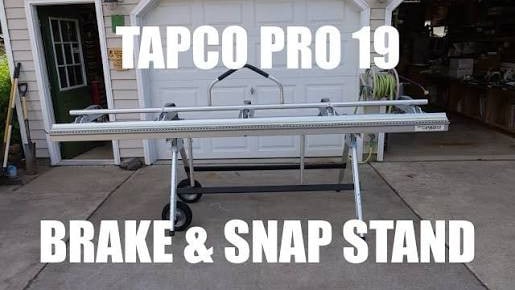
A dedicated stand gives the brake a consistent working height and reduces the need for makeshift jobsite supports.
TAPCO's Snap Stand is designed as a portable support for professional brakes and can help create a more repeatable setup from one project to the next.
A stable brake station can make measuring and bending more comfortable while reducing unnecessary movement during long fabrication sessions.
Make Mobility Part of the Setup
Large siding projects may require the fabrication station to move as the crew works around the house.
If moving the brake requires a complete teardown every time, crews may leave it in a location that is no longer efficient.
A wheel kit or mobile stand setup can make it easier to reposition the station while keeping the work area organized.
Keep Trim Coil Close to the Brake
Trim coil should not be stored on the opposite side of the jobsite if the crew is using it all day.
Keeping coil near the brake reduces walking and makes it easier to move from measurement to cutting to bending.
The coil should also be protected from dirt, moisture, foot traffic, and accidental damage.
Use a Coil Holder When Fabrication Volume Is High
High-production crews can benefit from a dedicated coil-handling system.
TAPCO accessories such as the Side-Winder or PRO-Coiler are designed to help manage trim coil as part of the fabrication process.
Better coil control can reduce dragging, kinking, scratching, and unnecessary handling while helping the station operate more efficiently.
Create a Dedicated Cutting Area
Cutting should be part of the fabrication workflow, not a separate process happening fifty feet away.
Crews using a brake-mounted cut-off tool can measure, cut, and form material in one general area.
That helps reduce unnecessary handling and makes repeated fabrication more efficient.
Keep Common Measurements Visible
Crews should not have to reinvent the same profile every time they fabricate it.
Post or keep a reference sheet with common dimensions for:
- Window jamb wraps
- Window heads
- Window sills
- Fascia covers
- Rake trim
- Door surrounds
- Common custom transitions
Standard dimensions can speed up production and help multiple installers create more consistent results.
Build Templates for Repeatable Profiles
A physical sample can be even more useful than a written measurement.
Keep examples of common profiles so installers can quickly compare face width, returns, hems, and bend sequence.
That can help new crew members learn faster and reduce variation between installers.
Give Finished Pieces a Safe Place to Go
Freshly fabricated trim should not be thrown into the grass or leaned against the side of the house where it can be bent or scratched.
Create a designated rack, table, or protected staging area for completed pieces.
Keeping finished parts organized by opening or elevation can also help installers find the right piece faster.
Label Pieces on Larger Projects
On a house with many windows, doors, and custom details, several fabricated pieces may look almost identical.
Simple labeling can prevent mistakes.
Identify pieces by window number, elevation, or installation location so installers do not waste time test-fitting the wrong component.
Keep Scrap Organized Too
Not every offcut belongs in the dumpster immediately.
Useful pieces of trim coil can become test material, small repair pieces, or practice material for new installers.
Separate usable scrap from actual waste so the brake area does not become cluttered.
Keep the Station Clean
Dirt and debris can scratch coated trim coil.
A messy brake area also increases the chance of tripping, damaging finished pieces, or losing small tools.
A few minutes of cleanup during the day can help protect materials and keep the fabrication process moving smoothly.
Keep the Essential Hand Tools at the Station
The crew should not have to search the jobsite every time it needs a basic fabrication tool.
Depending on the work being performed, the brake area may need:
- Tape measures
- Snips
- Markers or pencils
- Squares
- Hand seamers
- Utility knives
- Replacement cutting blades
- Small layout tools
A dedicated fabrication tool kit can eliminate repeated trips back to the truck.
Add a Brake Buddy Station if You Use Decorative Profiles
Contractors using a TAPCO Brake Buddy should plan enough work surface and material-handling space to form ribs before final bending.
Keep the necessary rollers and setup information near the brake so operators can switch between standard bends and decorative fabrication efficiently.
If a crew regularly uses the same profile, document the roller position and finished dimensions so it can be repeated without unnecessary trial and error.
Put the Most Experienced Fabricator Where the Bottleneck Is
On some jobs, the brake operator can become the person everyone is waiting on.
Watch the workflow.
If installers are constantly waiting for window wraps, fascia, or trim, the fabrication station may need more help, better standardization, or a second trained operator.
Productivity improves when fabrication keeps pace with installation.
Train More Than One Person to Fabricate
One skilled brake operator is valuable.
A crew with several people who understand common profiles is much stronger.
Train installers on standard window wraps, fascia, rake trim, hems, and common transitions first.
More complex custom work can come later as their skills improve.
Plan Tomorrow's Fabrication Before Leaving Today
Crews can save time by looking ahead.
Before leaving the job, identify which windows, fascia sections, doors, or transitions will be needed next.
Make sure the correct trim coil and accessories are ready so fabrication can begin immediately the next morning.
Protect the Brake From Weather and Jobsite Abuse
Professional fabrication equipment should be treated like production equipment.
Follow manufacturer recommendations for transportation, operation, cleaning, and maintenance.
A damaged brake, dull cutter, bent support, or dirty working surface can reduce both accuracy and productivity.
Do Not Let the Fabrication Station Become the Scrap Pile
One of the easiest ways to lose productivity is allowing the brake area to become the dumping ground for cardboard, siding scraps, packaging, and unused accessories.
Keep the fabrication station dedicated to fabrication.
Clear work areas make it easier to handle long pieces safely and protect finished trim.
Good Material Planning Is Part of the Fabrication Station
A perfect brake setup cannot solve a missing-material problem.
Before the project begins, contractors should think through:
- Siding panels
- Trim coil
- Starter strip
- J-channel
- Utility trim
- Corner posts
- Soffit
- Fascia
- Mounting blocks
- Flashing materials
- Project-specific accessories
The fabrication station works best when the crew has the correct materials available before production starts.
Talk to the Sales Counter Before the Job
Suburban Wholesale & Supply works with siding contractors throughout Davenport, Bettendorf, Eldridge, Moline, Rock Island, East Moline, and surrounding Quad Cities communities to help coordinate complete siding material packages.
Our sales counter team can help with takeoffs, trim coil, siding accessories, color coordination, material returns, product questions, and the small items that can otherwise slow down a productive crew.
Learn more about contractor support from Suburban Wholesale & Supply .
Daily Jobsite Delivery Can Support the Station Too
A fabrication station can only stay productive if the material supply keeps up with the crew.
Running short on trim coil, siding, channels, corners, or accessories can bring production to a stop.
Suburban Wholesale & Supply provides daily jobsite delivery to help contractors keep active projects supplied throughout the Quad Cities market.
Better Setup Makes Good Brake Work Easier to Repeat
Productivity is not about rushing.
It is about creating a process that allows skilled installers to produce quality work with fewer unnecessary steps.
A stable brake, organized coil, efficient cutting, standard profiles, protected finished pieces, trained operators, and complete material packages all contribute to a better fabrication workflow.
Suburban Wholesale & Supply supports professional siding contractors throughout the Quad Cities, Eastern Iowa, and Western Illinois with siding, trim coil, accessories, material planning, product knowledge, contractor support, training, and daily jobsite delivery.
Build a Better Fabrication Workflow
Talk with the sales counter team at Suburban Wholesale & Supply about siding, trim coil, brake accessories, soffit, fascia, corners, channels, and complete material packages for your next project.
Bring your measurements, material list, plans, or jobsite questions and let our team help you get the right products on the job so your crew can keep moving.
Part of: Aluminum & Trim
More in Aluminum & Trim
- TAPCO Brake Accessories That Make Siding Crews More Productive
- How Better Brake Work Separates Professional Siding Contractors
- How to Add Ribs and Decorative Details to Trim Coil With a Brake Buddy
- 5 Details You Can Create With a TAPCO Brake Buddy
We stock 50 trim coil colors, soffit and fascia, along with Malco tools and Tapco brakes. We keep limited quantities of Gentek aluminum siding on hand.
Share This Post
Share it on Facebook or X, or send it through your device share sheet for Instagram.