Stock siding accessories have an important place, but they cannot solve every exterior condition. Learn why professional contractors use custom-bent aluminum to create cleaner window wraps, fascia, rake trim, transitions, and other details that fit the actual home.
Professional Siding Installation & Custom Exterior Trim
Why Custom-Bent Aluminum Is Better Than Trying to Make Every Detail Fit Stock Trim
Stock siding accessories are an important part of a professional siding system. Starter strip, J-channel, utility trim, corner posts, mounting blocks, and manufacturer-designed accessories all have specific jobs. But existing houses are not built around a catalog of standard trim dimensions. When a window, door, fascia board, rake, or transition does not fit a stock detail, custom-bent aluminum gives professional siding crews another option: fabricate the trim to fit the house instead of forcing the house to fit the trim.
This is one of the biggest advantages of having a professional siding brake on the jobsite.
A skilled installer can measure an existing condition, cut the appropriate aluminum trim coil, and fabricate a profile specifically for that location.
The result can be cleaner, better proportioned, and more professional than trying to make a stock trim piece work somewhere it was never designed to fit.
The key is knowing the difference between an application that calls for a manufacturer-designed siding accessory and a condition where custom aluminum fabrication makes sense.
Stock Trim Has an Important Purpose
Custom fabrication should not be viewed as a replacement for proper siding accessories.
A complete siding system may include components such as:
- Starter strip
- J-channel
- Utility or finish trim
- Inside corners
- Outside corners
- Window and door accessories
- Mounting blocks
- Soffit components
- Fascia accessories
- Other manufacturer-specific components
Those products are designed to perform specific functions within the siding system and should be used according to the manufacturer's installation requirements.
The problem begins when an installer tries to make a standard component solve a completely non-standard condition.
Existing Houses Are Not Standard
New siding may come in standardized dimensions. The house underneath it may have been changed repeatedly over the last fifty years.
Contractors regularly encounter:
- Different window projections
- Unusual brickmould dimensions
- Oversized fascia boards
- Older wood trim
- Additions built differently from the original house
- Previous siding installations
- Porches and enclosed additions
- Brick and stone transitions
- Deck connections
- Unusual rooflines
Expecting one stock trim profile to solve every one of those conditions is unrealistic.
Custom-Bent Aluminum Lets the Trim Fit the House
This is the fundamental difference.
With stock trim, the installer starts with a predetermined shape and tries to make it work with the existing condition.
With custom fabrication, the installer starts with the existing condition and designs the trim around it.
That changes the entire approach.
Instead of asking, "How can I make this piece fit?" the installer can ask, "What profile does this detail actually need?"
1. Custom Aluminum Can Fit the Actual Window Projection
Windows are one of the best examples.
Even similar-looking windows can project different distances from the wall depending on the original construction, replacement history, exterior sheathing, insulation, and previous remodeling.
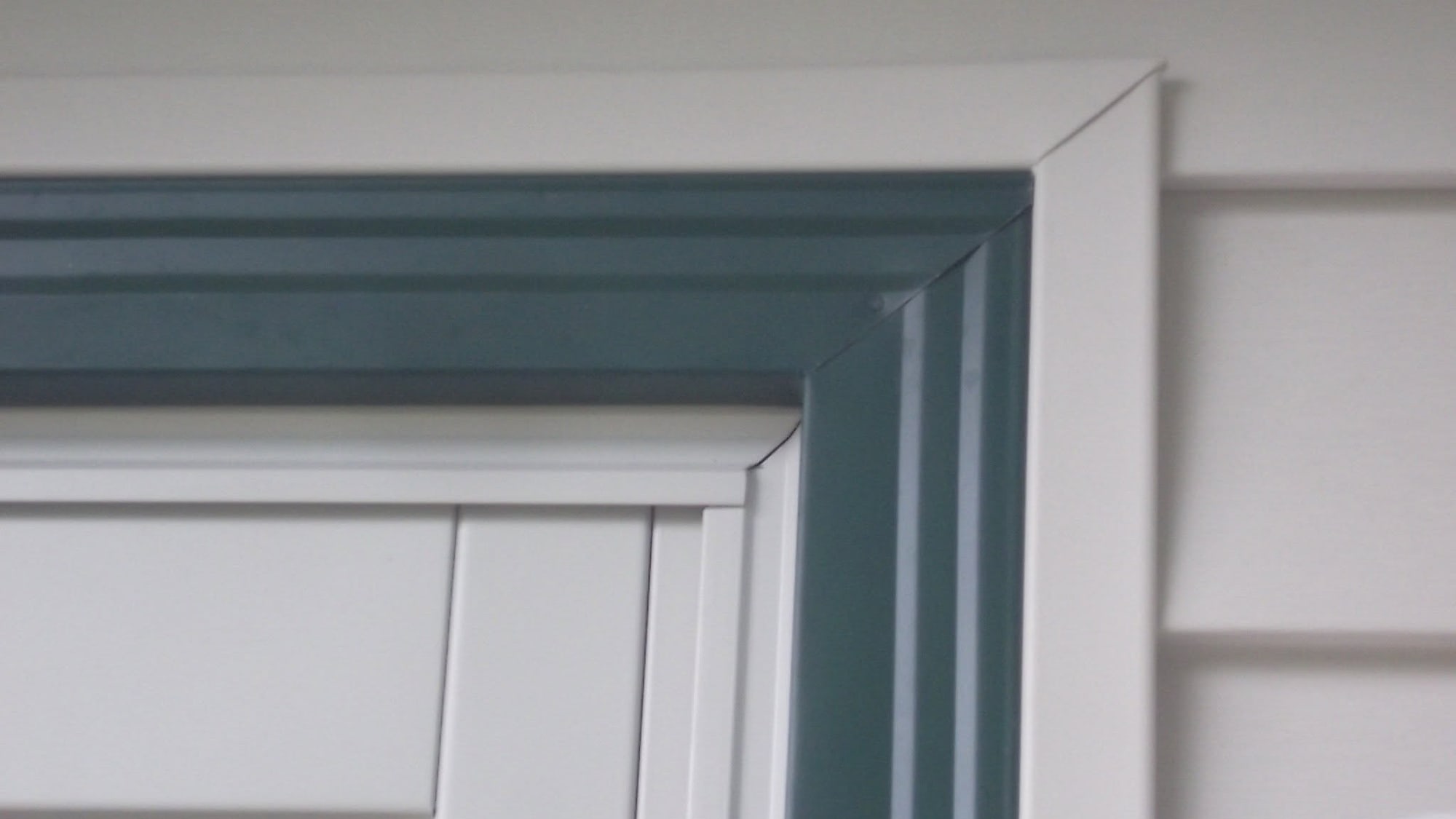
A siding brake allows an experienced installer to fabricate the sill, jamb, and head trim around the actual dimensions of the window.
That can produce a cleaner transition between the siding and window while allowing the trim proportions to work with the opening.
2. Custom Aluminum Can Produce Better-Looking Proportions
Just because a stock piece physically covers an area does not mean it looks right.
Exterior trim has visual proportions.
Trim that is too narrow may disappear around a large window. Trim that is unnecessarily wide may overpower a smaller opening.
Custom fabrication gives experienced installers more control over the dimensions of the finished trim so it can better complement the architecture of the home.
3. Custom Aluminum Can Create Cleaner Fascia Details
Fascia boards are another area where one standard dimension does not always work.
Board widths, roof edges, soffit conditions, and previous construction can all vary.
Custom-bent aluminum allows the installer to fabricate a fascia cover based on the actual board dimensions.
On long rooflines, consistent bends and properly planned joints can make a significant difference in the finished appearance.
4. Custom Aluminum Can Handle Unusual Rake Boards
Rake boards follow the angled edge of a gable and can vary considerably between homes.
A brake allows crews to fabricate rake trim based on the actual dimensions instead of trying to force a standard profile around an unusual board.
This can help create cleaner lines between the gable siding, soffit, fascia, and roof edge.
5. Custom Aluminum Can Solve Difficult Transitions
Exterior remodeling creates transitions everywhere.
Siding may need to meet:
- Brick
- Stone
- Older siding
- A porch
- An addition
- A roofline
- A deck
- Existing trim
- Other architectural features
There may not be a factory-made piece designed specifically for every transition.
Custom fabrication gives a skilled installer the ability to create a profile around the actual condition instead of stacking, cutting, or modifying unrelated stock pieces until something appears to fit.
6. Custom Aluminum Can Reduce the "Pieced Together" Look
One of the biggest visual problems with forcing stock trim into unusual conditions is that the finished detail can start looking assembled from several unrelated pieces.
Extra seams, unnecessary joints, small filler pieces, and inconsistent widths can draw attention to the trim instead of allowing it to complement the siding.
When appropriate, a properly fabricated piece can simplify the visual detail and create cleaner lines.
7. Custom Aluminum Gives Contractors More Control Over Hems and Edges
A skilled brake operator can incorporate hems and additional bends into a fabricated profile.
Depending on the application, a hem can stiffen an edge, conceal a raw cut edge, and give the trim a more finished appearance.
That level of control is difficult to achieve when the installer is limited entirely to a predetermined stock shape.
8. Custom Fabrication Can Improve Consistency Across the House
Custom does not have to mean different every time.
Professional siding companies can establish standard brake profiles for common conditions while adjusting dimensions when necessary.
For example, a crew might establish standard fabrication methods for:
- Window jambs
- Window sills
- Window heads
- Door trim
- Fascia covers
- Rake boards
- Frieze boards
That allows the crew to maintain a consistent appearance while still adapting to the dimensions of each opening.
9. Custom Aluminum Is Extremely Useful for Repair Work
Repair projects may be where custom fabrication becomes even more valuable.
The original trim may no longer be available. Previous installers may have created unusual details. Storm damage may affect only one portion of the exterior.
A siding brake allows contractors to fabricate a replacement piece around what is actually there.
That flexibility can be especially helpful for siding repairs, storm restoration, window replacement, and partial exterior renovations.
10. Custom Aluminum Lets the Installer Solve Problems Without Leaving the Job
Field conditions do not always match the estimate.
A crew may remove the old siding and discover a different trim dimension than expected. A window may project farther than it appeared during the estimate. An addition may create an unusual transition.
If the crew has a professional brake and the correct trim coil available, an experienced installer may be able to fabricate the solution directly on site.
That can help keep production moving while avoiding unnecessary trips to search for a stock component that may not solve the problem anyway.
Custom Does Not Mean Improvised
This is an important distinction.
Professional custom fabrication should not mean bending random pieces of aluminum until something covers the opening.
Good brake work should be measured, planned, repeatable, and appropriate for the application.
Skilled installers think through:
- The dimensions of the finished profile
- The sequence of bends
- Where hems are appropriate
- How pieces overlap
- How the detail interacts with siding accessories
- How the detail affects drainage
- How the finished trim will look from the ground
Custom Aluminum Does Not Replace Proper Flashing
A piece of aluminum can look perfect and still be part of a poorly designed water-management detail.
Window and door openings, roof intersections, penetrations, and other vulnerable areas still need to be properly integrated with the weather-resistant barrier and appropriate flashing system.
Brake-formed trim should complement proper flashing and drainage, not replace them.
The best exterior details perform correctly and look professional.
Custom Aluminum Does Not Replace Manufacturer Accessories Either
Contractors should resist the temptation to fabricate substitutes for components that are intended to be part of the siding system.
Manufacturer-designed starter strip, channels, corner posts, utility trim, mounting blocks, and other accessories have specific functions.
Professional installation is not about choosing between stock trim and custom fabrication.
It is about knowing where each one belongs.
Premium Siding Deserves Better Than "Make It Fit"
This becomes especially important as contractors move into premium siding systems.
If a homeowner is investing in heavier vinyl siding, composite cladding, steel siding, or another premium exterior product, the surrounding trim should support the quality of that investment.
The siding can be beautiful, but poorly fitted trim around windows, doors, fascia, and transitions can still make the overall installation look average.
Custom fabrication gives professional crews another way to make the details match the quality of the siding.
The Right Trim Coil Matters
A professional brake is only useful when the crew has the correct material available.
Contractors should consider trim coil color, finish, width, and compatibility with the exterior system before the job begins.
Color coordination is especially important because custom-fabricated trim may surround windows, doors, fascia, rake boards, and other highly visible areas.
Explore Gentek Performance G8 Trim Coil available through Suburban Wholesale & Supply.
Material Planning Should Include Both Stock Accessories and Fabrication Material
The best material package is not simply a siding count.
Contractors should think through the entire exterior before installation begins.
That may include:
- Siding panels
- Starter strip
- J-channel
- Utility trim
- Corner posts
- Mounting blocks
- Soffit
- Fascia
- Trim coil
- Flashing materials
- Other project-specific accessories
Suburban Wholesale & Supply works with contractors to help plan complete siding material packages rather than simply loading panels onto a truck.
Talk to the Sales Counter Before the Job Starts
Good material planning can eliminate a lot of unnecessary jobsite problems.
Bring measurements, plans, photos, or your material list to the sales counter at Suburban Wholesale & Supply.
Our team can help contractors think through siding, trim coil, channels, corners, soffit, fascia, accessories, color coordination, and other material needs before installation begins.
Learn more about contractor resources from Suburban Wholesale & Supply .
The Best Siding Crews Know When to Use Stock Trim and When to Fabricate
Professional exterior work is not about eliminating stock accessories.
It is about using the right component for the right detail.
Use the manufacturer-designed accessories where the siding system requires them. Use custom-bent aluminum where the existing architecture requires a fabricated solution.
When contractors combine quality siding, proper accessories, skilled brake fabrication, correct flashing, and good material planning, the finished exterior can look cleaner, perform better, and reflect a higher level of craftsmanship.
Suburban Wholesale & Supply supports contractors throughout Davenport, Bettendorf, Eldridge, Moline, Rock Island, East Moline, and the greater Quad Cities with siding, trim coil, accessories, product knowledge, material planning, contractor support, and daily jobsite delivery.
Need the Right Trim Coil and Accessories for Your Next Siding Job?
Talk with the sales counter team at Suburban Wholesale & Supply. Bring your measurements, photos, plans, or material list and let our team help coordinate siding, trim coil, soffit, fascia, corners, channels, accessories, and jobsite delivery for your next project.
Part of: Aluminum & Trim
More in Aluminum & Trim
- Five Brake Buddy Details That Can Make Aluminum Trim Look Better | Suburban Wholesale & Supply
- Jobsite Brake Setup: Build a Better Siding Fabrication Station
- TAPCO Brake Accessories That Make Siding Crews More Productive
- How Better Brake Work Separates Professional Siding Contractors
We stock 50 trim coil colors, soffit and fascia, along with Malco tools and Tapco brakes. We keep limited quantities of Gentek aluminum siding on hand.
Share This Post
Share it on Facebook or X, or send it through your device share sheet for Instagram.