Corner posts do more than create a finished edge on a vinyl siding project. Learn how proper sizing, fastening, expansion clearance, VSI guidance, ASTM standards, and manufacturer specifications affect corner-post installation on Davenport, Iowa, and Quad Cities homes.
Professional Vinyl Siding Installation Guidance
```Corner Posts Explained: Why This Siding Detail Matters
Corner posts are among the most visible accessories on a finished vinyl siding project. They create a clean transition where two exterior walls meet, conceal the cut ends of the siding panels, and provide receiving channels that allow those panels to expand and contract as outdoor temperatures change.
```Although corner posts may appear to be decorative trim, their role goes much deeper. Their size, position, fastening, clearance, and relationship to the siding profile can influence both the appearance and long-term performance of the completed exterior.
```For homeowners and contractors in Davenport, Iowa, and throughout the Quad Cities, understanding corner posts can help explain why professional siding installation requires careful planning before the first wall panel is installed.
```What Is a Vinyl Siding Corner Post?
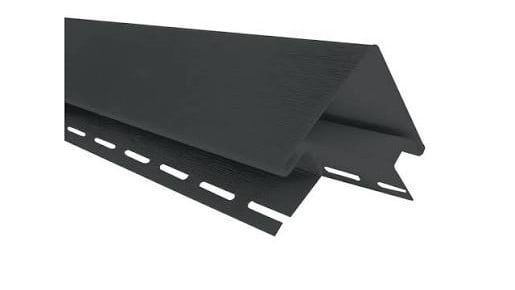
```A corner post is a formed siding accessory installed vertically where two exterior walls meet. The post creates receiving pockets for the siding panels on both adjoining walls while covering the cut panel ends.
Corner posts are manufactured in different widths, depths, profiles, materials, and colors. Some create a narrow traditional appearance, while wider profiles can add more architectural definition to the exterior.
The correct corner post must match the thickness and projection of the siding being installed. Standard vinyl siding, insulated vinyl siding, specialty siding, composite cladding, and vertical siding systems may each require different accessories.
```Outside Corner Posts and Inside Corner Posts
```The two primary types of corner accessories are outside corner posts and inside corner posts. Each serves a different wall condition.
Outside Corner Posts
An outside corner post is installed where two exterior walls form a projecting corner. It wraps around the corner and provides a receiving pocket for the siding on each wall.
Outside corner posts are highly visible and can influence the overall character of a home. Narrower posts generally create a more traditional vinyl siding appearance, while wider corner systems can resemble painted trim boards and provide stronger architectural contrast.
Inside Corner Posts
An inside corner post is used where two walls meet at an inward-facing angle. The accessory receives the cut siding panels from both walls and helps maintain a clean, consistent interior corner.
Depending on the siding manufacturer and product line, an inside corner may also be completed with approved combinations of J-channel, lineals, or specialty trim. The selected detail should always follow the manufacturer’s current installation instructions.
Why Corner Posts Are Installed Before the Siding
```Corner posts are normally installed before the wall siding panels. This allows the siding to be measured and cut so the ends fit inside the post’s receiving channels.
Installing the posts first also establishes the vertical edges of each siding wall. When the corner posts are straight, properly positioned, and securely fastened, installers have consistent termination points for the siding courses.
If a corner post is crooked, bowed, twisted, or positioned too tightly against another component, the problem can become increasingly visible as each siding course is installed.
```Before Selecting a Corner Post, Confirm:
```- The siding manufacturer and exact product line.
- The thickness and projection of the siding panel.
- The required receiving-pocket depth.
- Whether the project requires an inside or outside corner post.
- The desired face width and architectural appearance.
- The approved fastener type, length, and spacing.
- The required clearance at the top and bottom of the post.
- The approved method for joining posts on walls taller than one available length.
- Compatibility with soffit, fascia, starter strip, water-resistive barriers, and adjoining trim.
- Any special requirements for insulated siding or high-wind applications.
Corner Posts and VSI Installation Guidance
```The Vinyl Siding Institute installation resources, now maintained by the Polymeric Exterior Products Association, identify corner posts as essential accessories that should be installed before the surrounding siding panels.
VSI guidance addresses the positioning and fastening of both inside and outside corner posts. It also recognizes that vinyl accessories must be able to move as temperatures change, just as the siding panels do.
The VSI Vinyl Siding Installation Manual is based in part on ASTM D4756. It also advises installers to review local building requirements and the siding manufacturer’s current literature for instructions that may vary by product or geographic area.
General VSI practices provide a strong installation foundation, but they should not be used to override the specifications supplied by the manufacturer of the exact siding and accessory system.
```How ASTM Standards Apply to Corner Posts
```ASTM standards establish recognized practices and performance requirements for vinyl siding products and their installation. Corner posts are specifically included within the accessories addressed by the principal vinyl siding installation standard.
ASTM D4756
ASTM D4756 covers installation practices for rigid PVC siding, soffit, accessories, and fasteners. The standard specifically includes accessories such as starter strip, corner posts, and trim channels within its scope.
ASTM D3679
ASTM D3679 establishes material and performance requirements for rigid PVC siding. Its provisions address characteristics such as dimensions, expansion, shrinkage, impact strength, appearance, and wind-load resistance.
ASTM D5206
ASTM D5206 addresses wind-load testing for rigid plastic siding. While corner posts are not structural wind anchors by themselves, proper accessory selection and installation help ensure that siding panels are correctly positioned, received, and fastened as part of the tested exterior system.
```Vinyl Corner Posts Must Be Allowed to Move
```Vinyl expands when temperatures rise and contracts when temperatures fall. Corner posts must be installed so they can accommodate this movement without becoming distorted or placing pressure on the surrounding siding panels.
Industry guidance commonly calls for clearance between the top of the corner post and the soffit or eave. The exact amount depends on the product, installation temperature, wall configuration, and manufacturer instructions.
Fasteners also play an important role. The uppermost fastener is commonly positioned to support the post while allowing the remainder of the accessory to move. Other fasteners are generally centered within their slots and should not be driven so tightly that they pin the vinyl against the wall.
Because fastening details vary, installers should verify the exact slot position, spacing, fastener penetration, and clearance requirements for the selected accessory.
```Choosing the Correct Corner-Post Depth
```The receiving channels on a corner post must be deep enough to accept the siding panels while leaving room for expansion and contraction.
Standard vinyl siding may fit a traditional corner post, while insulated siding often requires a deeper receiving pocket. A post that is too shallow may compress the siding or prevent the panels from moving freely.
A corner post that is significantly deeper than necessary may allow the siding to sit loosely or create an inconsistent finished appearance. The post should therefore be matched to the exact siding profile rather than selected only by color or face width.
Manufacturer accessory charts and installation manuals are the best sources for confirming compatibility.
```Manufacturer Specifications Take Priority
```Siding manufacturers design corner posts and other accessories to work with specific panel systems. Their instructions may define the approved corner-post dimensions, fastening pattern, clearances, overlap procedure, wall preparation, and installation sequence.
For example, Alside’s instructions for Prodigy insulated siding identify a wide-pocket outside corner post designed to receive the thicker insulated panel. Those instructions call for space between the top of the corner post and the soffit or eave and provide a product-specific fastening pattern.
Composite and specialty cladding systems may use completely different corner assemblies. Alside’s ASCEND composite cladding, for example, includes its own dedicated outside-corner accessory and written installation requirements.
These examples show why installation details should never be transferred automatically from one product to another. Contractors should obtain the current instructions for the exact siding, corner post, and wall assembly being installed.
```Narrow Corner Posts Versus Wide Corner Posts
```Corner-post width affects the architectural appearance of the exterior. Traditional narrow corner posts create a familiar vinyl siding look and allow the siding panels to remain visually dominant.
Wider corner posts create stronger visual definition and can resemble painted wood trim. They may work especially well with board-and-batten siding, wider lap profiles, shakes, insulated siding, and homes designed with contrasting trim.
The best choice should complement the home’s windows, doors, soffit, fascia, roofline, and overall architectural style. The selection should also be available in a receiving depth approved for the siding product.
```Color-Matched and Contrasting Corner Posts
```Color-matched corner posts blend into the siding and create a continuous exterior appearance. This approach can make smaller walls feel less visually divided and allows the siding profile to remain the main feature.
Contrasting corner posts create definition and can coordinate with window trim, entry doors, soffit, fascia, shutters, or decorative accents. White, black, charcoal, and other contrasting trims are increasingly used to frame the exterior.
Homeowners should consider the full exterior color plan before ordering accessories. Even when two products share a similar color name, differences in material, texture, sheen, or manufacturing process may affect how closely they match.
```Corner Posts and Siding Expansion
```Siding panels should extend far enough into the corner post to remain concealed during cold-weather contraction, but they should not be cut so tightly that warm-weather expansion is restricted.
Panels cut too tightly may buckle, ripple, or place pressure on the post. Panels cut too short may pull out of the receiving channel and expose unfinished ends.
Required panel clearance can vary according to the installation temperature, panel length, siding profile, and manufacturer’s directions. Installers should measure carefully and account for conditions at the time of installation.
Maintaining consistent clearance at both ends of a siding panel also helps keep the wall visually balanced.
```Installing Corner Posts Straight and Plumb
```A corner post should be installed straight, plumb, and aligned with the intended lower and upper termination points. Because the siding panels terminate into the post, even a small alignment error can become noticeable across the wall.
The wall surface behind the post should be flat and adequately supported. Uneven sheathing, protruding fasteners, deteriorated materials, or irregular existing trim can cause the post to twist or bow.
Proper wall preparation should be completed before the accessory is fastened. A corner post should not be forced into alignment over an uneven substrate.
```Extending Corner Posts on Tall Walls
```Some walls are taller than the available corner-post length. In these situations, two pieces may need to be joined.
The joint should be prepared according to the manufacturer’s approved procedure. This may involve trimming part of one post and overlapping the pieces so the upper section sheds water over the lower section.
The joint should not create a reverse overlap that directs water behind the lower accessory. It must also leave room for normal movement.
Because splice procedures differ among products, installers should not create a field detail without first reviewing the manufacturer’s instructions.
```Corner Posts Do Not Replace the Water-Resistive Barrier
```Corner posts finish the siding, but they are not intended to waterproof the underlying wall. The sheathing, water-resistive barrier, flashing, and other drainage-plane components must be properly installed before the corner post and siding are applied.
Incidental water may enter behind exterior cladding during wind-driven rain. The wall assembly should be designed so that water can drain downward and toward the exterior without entering vulnerable framing or interior materials.
Applying excessive sealant around corner posts can sometimes block intended drainage or restrict movement. Sealants should be used only where required by the approved installation detail.
```Common Corner-Post Installation Mistakes
```- Using the wrong receiving depth: A corner post that does not match the siding profile may compress the panels or leave them fitting too loosely.
- Installing the post out of plumb: A crooked corner becomes increasingly visible as siding courses are added.
- Fastening the post too tightly: Pinning the accessory against the wall can restrict temperature-related movement.
- Leaving inadequate clearance: A post installed tightly against the soffit, eave, or another termination can buckle as it expands.
- Cutting siding panels too tightly: Insufficient room inside the post can cause the siding to ripple or distort.
- Cutting siding panels too short: The panel ends may become visible during cold-weather contraction.
- Creating a reverse overlap: An improperly joined corner post can direct water behind the lower section.
- Installing over an uneven wall: Irregular sheathing or old trim can cause the post to twist, bow, or sit unevenly.
- Using a standard post with insulated siding: Thicker siding may require a dedicated wide-pocket accessory.
- Ignoring manufacturer instructions: General installation practices do not replace the written specifications for the exact product.
Replacing a Damaged Corner Post
```Corner posts can be damaged by impact, lawn equipment, windblown debris, construction activity, or long-term exposure. Replacement may require temporarily unlocking or removing siding panels from both adjoining walls.
In some repair situations, an approved overlay or field-formed repair may be possible. VSI installation resources include guidance for certain corner-post repairs, but the correct method depends on the extent of the damage and the product involved.
A repair should preserve the siding’s ability to move and should not block drainage or create an obvious unfinished edge. When possible, the replacement accessory should match the original profile, color, and receiving depth.
```Why Corner-Post Details Matter in Davenport, Iowa
```Davenport and the greater Quad Cities area experience hot summers, cold winters, strong winds, rain, snow, ice, and repeated freeze-and-thaw cycles. These seasonal conditions make proper expansion clearance and fastening especially important.
A corner post installed during cold weather must have room to expand when summer heat arrives. A post installed during hot weather must remain properly positioned as it contracts during winter.
Wind-driven rain also places greater importance on the water-resistive barrier and flashing behind the exterior cladding. Corner posts should work with the complete wall system rather than being expected to provide waterproofing by themselves.
Older Davenport-area homes may have uneven sheathing, multiple layers of siding, replacement windows, additions, modified rooflines, or previous exterior repairs. Those conditions should be evaluated before new corner posts and siding are installed.
``````“Corner posts help define the entire siding project. They need to match the siding profile, remain straight, allow room for movement, and work with the wall’s drainage system. When those details are handled correctly, the corners look cleaner and the siding can perform the way the manufacturer intended.”
```
Corner Posts Are Part of a Complete Siding System
```Professional siding installation depends on more than the wall panels. Corner posts, starter strip, J-channel, utility trim, soffit accessories, mounting blocks, fasteners, flashing, and the water-resistive barrier must all work together.
Planning these accessories before installation begins can reduce delays and help prevent substitutions that do not fit the selected siding system.
The strongest results come from combining VSI guidance, applicable ASTM standards, manufacturer specifications, local building requirements, and experienced installation practices.
```Talk with the Siding Specialists at Suburban Wholesale & Supply
```Suburban Wholesale & Supply serves contractors, builders, remodelers, property owners, and homeowners throughout Davenport, Iowa, Bettendorf, LeClaire, Eldridge, Moline, Rock Island, and the surrounding Quad Cities area.
Our experienced team can help identify compatible inside corner posts, outside corner posts, starter strip, J-channel, utility trim, mounting blocks, soffit products, water-resistive barriers, fasteners, and siding accessories for your next exterior project.
Before installation begins, always review the current instructions for the exact siding and accessory system being used. Applicable building codes, approved project documents, and manufacturer warranty requirements should also be confirmed.
```Standards and Technical References
```- Polymeric Exterior Products Association and the Vinyl Siding Institute, Vinyl Siding Installation Manual.
- Polymeric Exterior Products Association, Vinyl Siding Accessories Installation Guide.
- Polymeric Exterior Products Association, Vertical Vinyl Siding Installation Guidance.
- ASTM International, ASTM D4756, Standard Practice for Installation of Rigid Poly(Vinyl Chloride) PVC Siding and Soffit.
- ASTM International, ASTM D3679, Standard Specification for Rigid Poly(Vinyl Chloride) PVC Siding.
- ASTM International, ASTM D5206, Standard Test Method for Windload Resistance of Rigid Plastic Siding.
- Alside, Prodigy Next-Generation Insulated Siding Installation Instructions.
- Alside, ASCEND Composite Cladding Installation Guide.
- Current installation instructions, accessory specifications, technical data, and warranty requirements published by the manufacturer of the selected siding system.
Technical note: Corner-post requirements vary according to siding profile, accessory design, wall height, installation temperature, substrate, local building requirements, and manufacturer specifications. This article provides general educational information and does not replace current manufacturer instructions, approved construction documents, or applicable building codes.
```Contractor Notes
We‘re here to help.
Suburban Wholesale & Supply works with contractors, remodelers, builders, and property professionals across Davenport, Bettendorf, Moline, Rock Island, and the wider Quad Cities. If Vinyl Siding Corner Posts Explained | Davenport, Iowa affects a project you are pricing, our team can help compare product lines, confirm available options, and prepare a quote that fits the opening, exterior, or jobsite requirements.
Our counter and showroom teams support window, patio door, entry door, storm door, siding, trim coil, gutter protection, and accessory orders every week. We can talk through manufacturer differences, color and finish selections, installation details, lead times, and documentation so you can give your customer clear answers before the work begins.
For current availability, contractor pricing, product literature, or help matching this topic to a real project, contact Suburban Wholesale & Supply or send the details through our quote form. We will help you move from product research to an accurate material order with fewer surprises.
Share This Post
Share it on Facebook or X, or send it through your device share sheet for Instagram.