What does a siding brake actually do? This contractor guide explains how siding crews use portable brakes to bend trim coil into custom window wraps, fascia, rake trim, flashing details, and other exterior components directly on the jobsite.
Contractor Tools & Siding Installation
What Does a Siding Brake Actually Do? A Contractor's Guide
A siding brake allows contractors to take flat aluminum trim coil and bend it into custom exterior trim pieces right on the jobsite. For professional siding crews, it is one of the most useful tools for creating clean window wraps, fascia covers, rake trim, custom flashing details, and transitions that standard factory-made accessories cannot always handle.
If you are new to siding installation, a brake can look like a large folding table with a clamping mechanism.
In the hands of an experienced installer, it becomes a small fabrication shop.
Contractors can measure an existing condition, cut a piece of trim coil, clamp it into the brake, and create precise bends to fit the actual house.
That ability is especially valuable because exterior remodeling rarely involves perfectly standardized openings and details.
What Is a Siding Brake?
A siding brake is a portable sheet-metal bending tool commonly used by siding, window, roofing, and exterior remodeling contractors.
The installer places trim coil or compatible sheet material into the brake, clamps it securely, and uses the bending mechanism to form straight, controlled bends.
By making a series of bends, a flat piece of coil can become a finished trim component designed specifically for the project.
What Material Goes Into a Siding Brake?
Aluminum trim coil is one of the most common materials used by siding contractors because it can be cut and formed into exterior trim pieces.
Depending on the brake model and manufacturer specifications, some machines can also form certain gauges of steel and copper.
Contractors should always stay within the material-capacity specifications for the brake they are using.
Suburban Wholesale & Supply carries exterior trim coil and works with contractors to coordinate colors and accessories with the siding system being installed.
Explore Gentek Performance G8 Trim Coil available through Suburban Wholesale & Supply.
What Can You Make With a Siding Brake?
The real value of the brake is versatility.
A skilled installer can fabricate many different exterior components, including:
- Window wraps
- Door trim
- Fascia covers
- Rake trim
- Frieze-board covers
- Sill covers
- Custom flashing pieces
- Transition pieces
- Decorative trim details
- Repair pieces for existing exteriors
Instead of hoping a factory accessory fits the condition, the installer can fabricate a piece around the actual measurements of the home.
How Does a Siding Brake Work?
At its most basic level, the process is straightforward.
- Measure the area that needs trim.
- Determine the dimensions and bends required.
- Cut the trim coil to the proper width and length.
- Insert the material into the brake.
- Align the bend location.
- Clamp the material securely.
- Raise the bending mechanism to form the desired angle.
- Repeat the process for additional bends or hems.
- Test-fit the finished piece.
- Make adjustments if necessary before installation.
The concept is simple. Producing clean, repeatable profiles quickly is where installer skill becomes important.
Why Is It Called a Brake?
In sheet-metal work, a brake is a machine used to bend material along a straight line.
A portable siding brake is essentially a jobsite version designed around the materials and dimensions commonly used in exterior remodeling.
It gives siding crews the ability to perform fabrication work without sending every custom piece to a sheet-metal shop.
Why Are Window Wraps One of the Most Common Brake Jobs?
Existing windows come in countless sizes, depths, and trim configurations.
Older homes are especially likely to have conditions that do not match a standard piece of trim.
A brake allows installers to fabricate aluminum pieces that fit the sill, jambs, head, and surrounding trim dimensions of the actual window.
When done correctly, the finished wrap can provide a clean transition between the window and the new siding system while supporting proper exterior detailing.
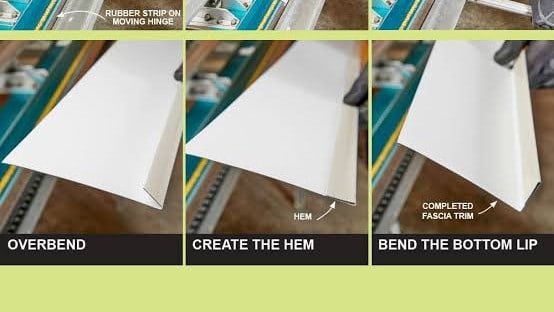
What Is a Hem?
A hem is a folded edge created by bending the material back onto itself or close to itself.
Hems can help stiffen an edge, create a cleaner finished appearance, and remove an exposed sharp cut edge depending on the application.
Learning how to create clean, consistent hems is one of the basic skills a new brake operator should practice.
Why Does Brake Depth Matter?
The throat depth determines how far material can extend into the brake for certain bends.
More depth can give contractors additional flexibility when fabricating larger profiles.
TAPCO's PRO 19, for example, provides a 19-inch throat depth and a 2-3/8-inch mouth opening. TAPCO lists the PRO 19 for forming soft aluminum up to .030", galvanized steel up to 28 gauge, and copper sheet or coil up to 16 ounces.
Why Does Brake Length Matter?
Brake length determines how long of a continuous piece the crew can form.
Longer brakes can be useful for fascia, rake boards, window heads, and other long trim pieces where reducing seams may improve both appearance and efficiency.
TAPCO offers its PRO 19 in multiple lengths, including 8'6", 10'6", and 12'6", allowing contractors to choose a size based on the type of exterior work they commonly perform.
A Siding Brake Is Not Just for Siding
Although contractors often call it a siding brake, the tool can support several types of exterior remodeling work.
Crews may use it during:
- Vinyl siding installation
- Steel siding installation
- Composite siding projects
- Replacement window installation
- Exterior door installation
- Soffit and fascia replacement
- Storm-damage repairs
- Exterior trim renovations
That versatility is one reason a quality brake can become one of the most-used fabrication tools in an exterior remodeling operation.
A Brake Helps Contractors Solve Problems in the Field
The real world does not always match the material list.
Maybe a window projects farther than expected. Maybe an old fascia board is wider than the standard material. Maybe a previous addition creates an unusual transition.
Without fabrication capability, the crew may have to leave the job, find another accessory, or wait for a special piece.
With a brake and the right trim coil on site, an experienced installer may be able to solve the problem immediately.
A Siding Brake Can Improve Jobsite Efficiency
Every unnecessary material run costs time.
If the crew can fabricate a needed trim piece on the jobsite instead of leaving to locate a specialized component, production can continue.
That does not mean the brake replaces proper material planning.
It means the crew has another tool available when field conditions require a custom solution.
Brake Work Can Improve the Finished Appearance
Homeowners may choose siding based on color and profile, but the trim work often determines how finished the exterior ultimately looks.
Consistent bends, clean hems, properly proportioned window wraps, sharp fascia details, and carefully planned transitions can make a substantial visual difference.
That is especially important when installing premium siding systems. Premium panels surrounded by sloppy trim can still produce an average-looking exterior.
The Brake Does Not Replace Proper Flashing
This distinction is important.
A beautifully bent aluminum trim piece does not automatically create proper water management.
Window and door openings, roof intersections, penetrations, and other vulnerable areas still need to be detailed according to the applicable manufacturer instructions and building requirements.
Brake work should complement proper flashing and drainage—not replace them.
Skill Matters More Than Owning the Tool
A siding brake is relatively easy to understand and much harder to master.
Good operators develop a feel for measurement, material movement, bend sequencing, hems, overlaps, and repeatable profiles.
New installers should practice with scrap coil before fabricating highly visible trim pieces on a customer's home.
Over time, experienced operators learn how to look at an exterior condition and mentally build the profile before they ever put the material into the brake.
Create Standard Bend Profiles for Your Crew
Professional siding companies can improve consistency by developing standard fabrication details for common applications.
Examples might include:
- Window sill profiles
- Window jamb wraps
- Window head details
- Fascia bends
- Rake-board covers
- Frieze-board details
- Door trim
Standardizing common bends can improve speed, reduce mistakes, and help multiple installers produce a more consistent finished result.
Trim Coil Color Should Be Planned Before the Crew Starts Bending
Fabrication begins with the correct material.
Contractors should determine how the trim coil will coordinate with siding, soffit, fascia, windows, doors, corners, and other exterior components before ordering materials.
Suburban Wholesale & Supply works with contractors throughout Davenport, Bettendorf, Moline, Rock Island, East Moline, and the greater Quad Cities to coordinate siding panels, trim coil, starter strip, channels, corners, soffit, fascia, and accessories into a complete material package.
Learn more about siding materials and contractor support from Suburban Wholesale & Supply .
A Brake Works Best When the Whole Material Package Is Planned Correctly
The brake can solve custom fabrication problems, but the crew still needs the correct siding, trim coil, channels, corners, starter strip, mounting blocks, soffit, fascia, and other accessories on site.
Proper takeoffs and material planning help prevent the brake from becoming a workaround for materials that should have been ordered in the first place.
Suburban Wholesale & Supply supports local contractors with material planning, siding inventory, accessories, product knowledge, and daily jobsite delivery throughout the Quad Cities market.
Explore Suburban Wholesale & Supply's contractor resources .
A Siding Brake Turns Installers Into Fabricators
That is ultimately what makes the tool so valuable.
Professional crews are not limited to whatever trim piece happens to come out of a box. They can measure the actual condition, design a profile, and fabricate a piece that fits the project.
TAPCO's professional brake systems are built specifically around that type of jobsite fabrication. The PRO 19, for example, offers a 19-inch throat depth and is rated by TAPCO for soft aluminum up to .030", galvanized steel up to 28 gauge, and copper sheet or coil up to 16 ounces. :contentReference[oaicite:0]{index=0}
Suburban Wholesale & Supply supports siding contractors across the Quad Cities with trim coil, siding, accessories, product knowledge, material planning, and jobsite delivery. :contentReference[oaicite:1]{index=1}
Need Trim Coil or Materials for Your Next Siding Job?
Talk with the sales counter team at Suburban Wholesale & Supply. Bring your plans, measurements, photos, or material list and let our team help coordinate siding, trim coil, accessories, colors, and jobsite delivery for your next project.
Part of: Aluminum & Trim
More in Aluminum & Trim
- Jobsite Brake Setup: Build a Better Siding Fabrication Station
- TAPCO Brake Accessories That Make Siding Crews More Productive
- How Better Brake Work Separates Professional Siding Contractors
- How to Add Ribs and Decorative Details to Trim Coil With a Brake Buddy
We stock 50 trim coil colors, soffit and fascia, along with Malco tools and Tapco brakes. We keep limited quantities of Gentek aluminum siding on hand.
Share This Post
Share it on Facebook or X, or send it through your device share sheet for Instagram.