A properly installed starter strip creates the level, secure foundation every vinyl siding project needs. Learn why VSI standards, ASTM installation practices, and manufacturer specifications make this small component essential for long-term siding performance.
Professional Siding Installation Guidance
```Why Starter Strip Matters in a Professional Vinyl Siding Installation
When homeowners look at a completed vinyl siding project, they naturally notice the color, profile, trim, and overall curb appeal. What they rarely see is one of the most important components of the entire installation: the starter strip.
```Installed along the bottom of the exterior wall, starter strip provides the secure connection for the first course of horizontal siding. Although it is a relatively small accessory, its position, alignment, fastening, and compatibility can influence every siding panel installed above it.
```For contractors and homeowners in Davenport, Iowa, and throughout the Quad Cities, understanding the importance of starter strip can help prevent avoidable installation problems and support a cleaner, more professional finished exterior.
```What Is Vinyl Siding Starter Strip?
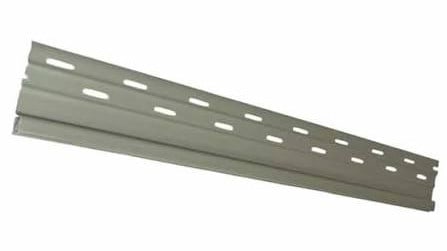
```Starter strip is an accessory fastened directly to the exterior wall near the base of the siding installation. Its formed edge is designed to receive and secure the bottom lock of the first siding panel.
The Polymeric Exterior Products Association, formerly widely recognized through the Vinyl Siding Institute installation program, defines starter strip as the accessory used to secure the first course of siding to the home. Once that first course is properly secured, the remaining courses can be installed upward in an orderly and consistent manner.
```Why the First Course Is So Important
```A vinyl siding installation builds from the bottom upward. This means the first course acts as the foundation for the rows above it. When the starter strip is level and correctly positioned, it helps establish straight horizontal lines across the wall.
When it is installed unevenly, too tightly, too loosely, or at the wrong height, those errors may continue across the wall. The result can include siding courses that appear crooked, uneven shadow lines, poorly aligned corners, or panels that do not lock together correctly.
Proper starter strip installation helps:
- Establish a straight and level first course of siding.
- Secure the bottom edge of the first siding panel.
- Support consistent panel alignment across the wall.
- Reduce the possibility of loose or improperly engaged panels.
- Create clean visual lines around corners, doors, windows, and adjoining walls.
- Help the installed siding system perform according to its intended design.
Starter Strip and VSI Installation Standards
```Industry installation guidance places clear importance on properly preparing the wall and establishing the starting point of the siding system. The VSI Vinyl Siding Installation Manual is based in part on ASTM D4756, the recognized standard practice for installing rigid PVC siding, soffit, and related accessories.
VSI guidance identifies starter strip as a key siding accessory and emphasizes the importance of following accurate layout, fastening, clearance, and panel-engagement procedures. The guidance also advises installers to review local building requirements and the siding manufacturer’s instructions for product-specific details.
Current model residential-code guidance referenced by the Polymeric Exterior Products Association also states that the first course of vinyl siding, insulated vinyl siding, backed vinyl siding, and polypropylene siding must be secured to the wall with an appropriate starter strip, unless another approved first-course attachment method applies.
```How ASTM Standards Relate to Starter Strip
```ASTM D4756 covers minimum requirements and installation methods for rigid vinyl siding, soffit, accessories, and fasteners. Starter strip is specifically included among the accessories addressed by the standard.
ASTM D3679, the material specification commonly associated with rigid PVC siding, directs that qualifying siding be installed in accordance with ASTM D4756 while also referring installers to the manufacturer’s instructions for the particular product being used.
Together, these standards reinforce an important point: high-quality siding alone is not enough. Long-term performance depends on installing the product and its accessories as a complete system.
```Manufacturer Specifications Always Matter
```General industry standards create a strong foundation, but siding products are not all identical. Panel thickness, bottom-lock design, exposure, projection, insulation, accessory dimensions, and fastening requirements can vary between manufacturers and product lines.
That is why installers should use a starter strip approved or recommended for the siding profile being installed. Substituting an incompatible accessory can prevent the first panel from engaging correctly or change the intended position of the siding on the wall.
Before installation begins, professionals should verify:
- The correct starter strip for the selected siding product.
- Required fastener type, length, and spacing.
- The manufacturer’s required wall and ground clearances.
- Proper engagement between the starter strip and first siding course.
- Expansion and contraction allowances.
- Requirements for insulated, reinforced, vertical, or specialty siding profiles.
Level, Straight, and Properly Positioned
```Before fastening the starter strip, the installer should determine the proper starting height and establish a level reference line around the structure. Measuring from an uneven foundation, sidewalk, patio, or landscaping surface without checking level can create visible inconsistencies.
The starter strip should be positioned so the first siding course maintains the clearances required by applicable codes and the manufacturer. The wall surface should also be flat and properly prepared because starter strip cannot correct major waves, damaged sheathing, or an uneven substrate.
Careful preparation may take additional time at the beginning of the project, but it can make the remaining siding installation smoother, faster, and more consistent.
```Starter Strip Must Allow the Siding to Move
```Vinyl siding expands and contracts as outdoor temperatures change. VSI installation guidance notes that a full-length vinyl siding panel can experience noticeable movement during normal seasonal temperature changes.
For that reason, siding accessories and panels should not be fastened in a way that restricts normal movement. Fasteners must be installed according to the manufacturer’s instructions, and adjoining starter-strip sections should be positioned with the required spacing rather than forced tightly together.
Restricting movement can contribute to buckling, waviness, distortion, or unwanted stress on the siding system. Proper installation allows the exterior to remain secure while still accommodating normal expansion and contraction.
```Common Starter Strip Installation Mistakes
```Starter strip problems are often difficult to correct after several courses of siding have been installed. Recognizing common mistakes early can help prevent callbacks and unnecessary material removal.
- Installing the strip out of level: Even a small variation can become more noticeable as additional siding courses are installed.
- Using an incompatible starter strip: The first panel may not lock securely or may sit at the wrong angle.
- Positioning the strip too low: This can reduce required clearance from grade, concrete, decks, roofing, or other adjoining surfaces.
- Positioning the strip too high: The exposed foundation or lower wall may become visually inconsistent.
- Fastening too tightly: Accessories may be prevented from moving normally during temperature changes.
- Installing over an uneven wall: Waves or irregularities in the substrate can affect the appearance of the entire siding system.
- Failing to fully engage the first course: A panel that is not properly locked may become loose or perform differently than intended.
Why Starter Strip Matters in the Davenport, Iowa Climate
```Homes in Davenport, Bettendorf, Eldridge, Moline, Rock Island, and surrounding Quad Cities communities experience hot summers, cold winters, wind, rain, snow, and repeated freeze-and-thaw cycles.
Those changing conditions make proper installation especially important. A siding system must be able to remain attached while also accommodating normal material movement. Correct starter strip selection and placement help establish that balance from the first course upward.
Local installers also encounter a wide range of construction styles, including older homes with uneven substrates, additions built during different periods, masonry foundations, and previously remodeled exterior walls. Each condition requires careful evaluation before the first piece of siding is installed.
``````“Starter strip may not be the most visible part of a siding project, but it helps establish the alignment and security of everything installed above it. Starting correctly is one of the simplest ways to support a professional-looking finished exterior.”
```
A Complete Siding System Begins with the Right Accessories
```Homeowners often spend considerable time selecting a siding color and profile. Contractors understand that the accessories behind and around those panels are equally important.
Starter strip, corner posts, J-channel, utility trim, flashing, fasteners, water-resistive barriers, and other components must work together. Using compatible accessories and following established installation procedures can help protect the appearance and intended performance of the finished exterior.
Cutting corners on a component as fundamental as starter strip can create problems that are more expensive and time-consuming to correct later.
```Talk with the Siding Specialists at Suburban Wholesale & Supply
```Suburban Wholesale & Supply serves professional contractors, remodelers, builders, and homeowners throughout Davenport, Iowa, and the greater Quad Cities area.
Our experienced team can help identify compatible siding panels, starter strips, trim accessories, fastening products, and installation resources for your next exterior project.
Before beginning a siding installation, always review the current manufacturer instructions for the exact product being installed and confirm any applicable local building-code requirements.
```Standards and Technical Sources
```- Polymeric Exterior Products Association, formerly the Vinyl Siding Institute installation program, Vinyl Siding Installation Manual.
- ASTM International, ASTM D4756, Standard Practice for Installation of Rigid Poly(Vinyl Chloride) PVC Siding and Soffit.
- ASTM International, ASTM D3679, Standard Specification for Rigid Poly(Vinyl Chloride) PVC Siding.
- Polymeric Exterior Products Association, International Residential Code Requirements for Polymeric Cladding.
- Current installation instructions and accessory specifications supplied by the manufacturer of the siding product selected for the project.
Technical note: Installation requirements can vary by siding profile, manufacturer, wall assembly, local code, and project conditions. This article provides general educational information and does not replace product-specific installation instructions or applicable building-code requirements.
```Contractor Notes
We‘re here to help.
Suburban Wholesale & Supply works with contractors, remodelers, builders, and property professionals across Davenport, Bettendorf, Moline, Rock Island, and the wider Quad Cities. If Why Vinyl Siding Starter Strip Matters | Davenport, Iowa affects a project you are pricing, our team can help compare product lines, confirm available options, and prepare a quote that fits the opening, exterior, or jobsite requirements.
Our counter and showroom teams support window, patio door, entry door, storm door, siding, trim coil, gutter protection, and accessory orders every week. We can talk through manufacturer differences, color and finish selections, installation details, lead times, and documentation so you can give your customer clear answers before the work begins.
For current availability, contractor pricing, product literature, or help matching this topic to a real project, contact Suburban Wholesale & Supply or send the details through our quote form. We will help you move from product research to an accurate material order with fewer surprises.
Share This Post
Share it on Facebook or X, or send it through your device share sheet for Instagram.